





















11 May
0
2992
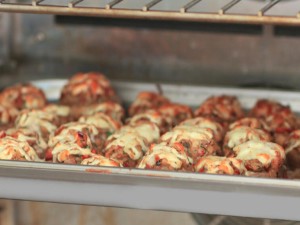
In a food laboratory, temperature control is one of the most critical aspects for ensuring product safety.
The blast chiller is not just a support machine, but a central tool in risk management according to the HACCP system.
Understanding how to use it correctly helps avoid operational errors and improve the quality of processes.
Why is the blast ..
07 May
0
2080
The professional bone saw is a machine designed for intensive processing, but its effectiveness also depends on how it is maintained over time.
Cleaning and maintenance are not secondary tasks, but an integral part of daily operations.
An unclean or poorly maintained bone saw not only loses efficiency but can also become a risk to safety and produc..
04 May

0
2155
The professional hamburger press is not used in the same way in every context.
Butcher shops and restaurants have different operational needs, and this directly affects volumes, frequency of use and work organization.
Understanding these differences is essential to choosing the right machine and integrating it correctly into the production process,..
29 Apr
0
3083
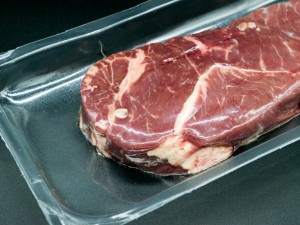
When choosing a blast chiller, attention is often focused on brand or price.
In practice, however, it is capacity, chilling time and cycles that truly determine the machine’s efficiency in daily operations.
Understanding these elements helps avoid bottlenecks, improve organization, and make the most of the blast chiller.
What determines the perfor..
27 Apr
0
2375
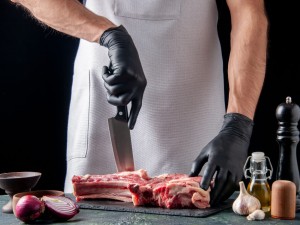
The professional bone saw is not used in the same way across all contexts.
Butcher shops and restaurants have different operational needs, and this directly affects frequency of use, type of processing, and the role of the machine within the workspace.
Understanding these differences is essential to choosing and using the bone saw in a way that is ..
23 Apr
0
2405
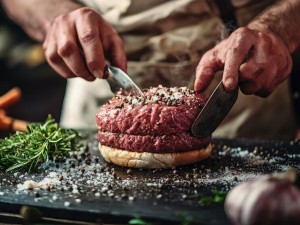
In the daily work of a butcher shop or food laboratory, preparing hamburgers is not just about grinding meat.
The real difference lies in the forming stage, where precision, method, and equipment come into play.
A well-made hamburger is not random: it is the result of a consistent process, starting from the raw material and leading to a uniform and..
20 Apr
0
4515
When discussing blast chillers, one of the most important distinctions concerns how they operate: positive blast chilling and negative blast chilling.
Understanding this difference is not just a technical matter, but directly affects workflow organization, food preservation, and time management in the laboratory.
What is the difference between pos..
16 Apr
0
1874
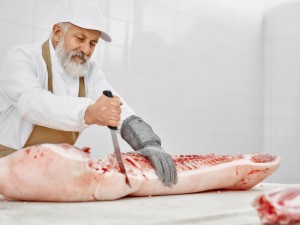
The professional bone saw is one of the most useful pieces of equipment in a butcher’s lab, but also one of the most sensitive in terms of safety.
It is not the machine itself that is dangerous, but the way it is used and integrated into the workflow.
For this reason, talking about a bone saw necessarily means talking about operational safety.
Is ..
13 Apr
0
2781
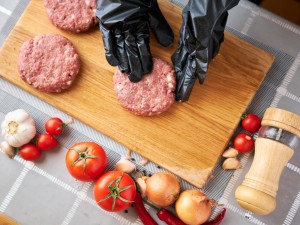
When it comes to hamburger production in a professional setting, the choice of hamburger press is often considered secondary.
In reality, it is a decision that directly affects workflow organization, production speed, and the quality of the final product.
The hamburger press is not a standalone machine, but a specific stage in a process that starts..
09 Apr
0
2251
When designing a food laboratory, the blast chiller is one of the pieces of equipment that most significantly impacts time management, product safety, and overall workflow organization.
It is not an accessory machine, but a critical control point that connects production, storage, and service.
For this reason, the blast chiller should not be added ..
06 Apr
0
1312
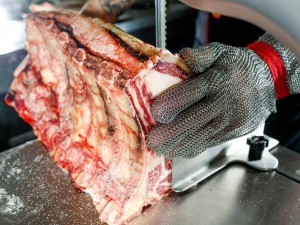
When choosing a professional bone saw, the most common mistake is focusing only on price or size.
In reality, it is blade, power and structure that determine the machine’s performance and its effectiveness in daily operations.
Understanding these elements means choosing a bone saw that fits your laboratory, avoiding operational issues and wasted ti..
02 Apr
0
1822
The professional meat grinder is often considered a piece of equipment “for butcher shops,” but in practice it is also used in many delicatessen laboratories.
The critical point is not where it is used, but how it is used and integrated into the workflow.
Butcher shops and delicatessens have different needs, and treating them the same way almost al..