





















SHOP NOW:


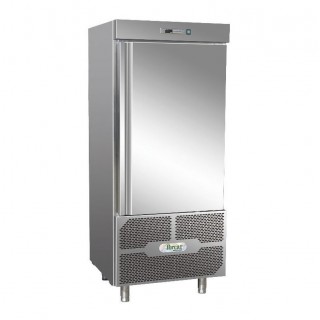



When discussing blast chillers, one of the most important distinctions concerns how they operate: positive blast chilling and negative blast chilling.
Understanding this difference is not just a technical matter, but directly affects workflow organization, food preservation, and time management in the laboratory.
What is the difference between positive and negative blast chilling?
Positive blast chilling rapidly cools food for short-term storage, while negative blast chilling brings it to freezing temperatures for longer preservation.
What is positive blast chilling?
Positive blast chilling consists of rapidly cooling freshly cooked food to a positive storage temperature, generally around +3°C.
This process helps preserve the organoleptic properties of the product and reduces the risk of bacterial growth.
In daily operations, it is used for:
- preparations to be stored in refrigeration
- advance production
- service organization
What is negative blast chilling?
Negative blast chilling, on the other hand, rapidly brings food to freezing temperatures, typically down to -18°C.
Unlike traditional freezing, this process occurs much faster, preventing the formation of large ice crystals that damage food structure.
It is particularly useful for:
- longer storage
- handling production peaks
- planned stock management
What is the operational difference between positive and negative blast chilling?
The difference is not only about the final temperature, but how the blast chiller is used within the workflow.
Positive blast chilling is linked to daily operations and product turnover, while negative blast chilling is more oriented toward planning and storage.
This distinction becomes essential when integrating the blast chiller into the context of blast chiller integration in food laboratory design, where each function must align with the production cycle.
When should positive blast chilling be used?
Positive blast chilling is the most common choice in laboratories operating on a daily basis.
It allows advance preparation, maintains quality, and ensures safe service.
It is ideal when:
- the product is consumed within a short time
- turnover is high
- production is continuous
When should negative blast chilling be used?
Negative blast chilling is recommended when products need to be stored longer or when production is not immediate.
It is mainly used when:
- working with large volumes
- planning weekly production
- reducing waste
How to choose between positive and negative blast chilling?
The choice between positive and negative blast chilling depends on usage timeframes, production volumes, and workflow organization in the laboratory.
Blast chilling and food safety: what really changes?
Both processes contribute to food safety, but in different ways.
Positive blast chilling quickly reduces bacterial risk in the short term, while negative blast chilling allows longer preservation while maintaining quality and safety.
Temperature control is also central in vacuum packaging management according to HACCP in the food laboratory, where time and cold work together to ensure product safety.
Do you need a blast chiller that performs both functions?
In most cases, yes.
Modern professional blast chillers are designed to handle both positive and negative cycles, offering greater operational flexibility.
The choice always depends on the type of business and workflow.

When does it make sense to choose the type of blast chiller?
Only after defining:
- production volumes
- frequency of use
- laboratory organization
does it make sense to evaluate models and compare the blast chillers best suited to your laboratory, choosing a machine consistent with real operational needs.
The choice between positive and negative is not technical, but organizational
Many consider positive and negative blast chilling a technical difference, but in practice it is an organizational choice.
Understanding how and when to use each cycle means working better, reducing waste, and improving product quality.
SHOP NOW:
The right blast chiller is the one that follows the workflow, not the opposite
A well-used blast chiller integrates into the laboratory flow without creating interruptions.
Whether positive or negative, what matters is consistency with the production process.