




















SHOP NOW:


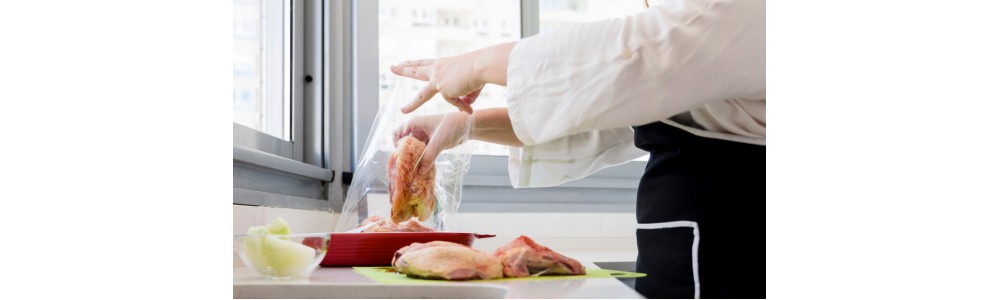
In daily operations, vacuum sealing is often perceived as an extra guarantee.
Less air, longer shelf life, better organization. All true—but not automatic.
From an HACCP perspective, vacuum sealing does not eliminate risks; it changes them.
Understanding how responsibilities and operational precautions change is essential to using this technique correctly and safely.
Vacuum sealing does not replace HACCP, it changes the approach
A very common misconception is thinking that vacuum sealing “makes food safe.”
In reality, vacuum sealing is not a safety measure in itself, but a preservation technique that must be managed within the HACCP plan.
By reducing oxygen, it slows the growth of some microorganisms, but it favors others.
This is why vacuum sealing requires different controls, not fewer controls.
What really changes when vacuum sealing is introduced in the laboratory
When vacuum sealing enters the workflow, some critical points change: storage times, labeling methods, temperature management, and opening and use procedures.
This is not a bureaucratic complication, but a practical consequence of storing products under conditions different from traditional fresh storage.
This is also why vacuum sealing should never be introduced as a later add-on, but evaluated together with the
design of the food laboratory,
so that equipment, spaces, and operating procedures are properly integrated.
Vacuum slows bacteria, but does not eliminate them
Vacuum sealing slows oxidation and the growth of aerobic bacteria.
This is one of the reasons it extends shelf life.
At the same time, however, it creates an environment favorable to anaerobic microorganisms.
For this reason, temperature and time become even more critical.
In daily work, this means one simple thing:
a vacuum-sealed product still needs to be managed, not “forgotten.”
Vacuum machines and HACCP: why equipment matters
Not all vacuum machines allow the same level of control.
An undersized machine, with unstable vacuum or inconsistent cycles, increases operational risk and makes it harder to keep safety procedures consistent.
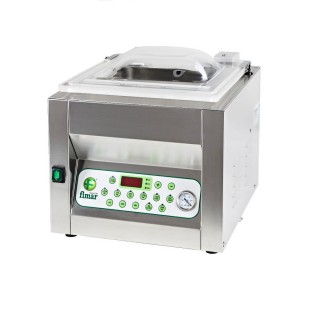
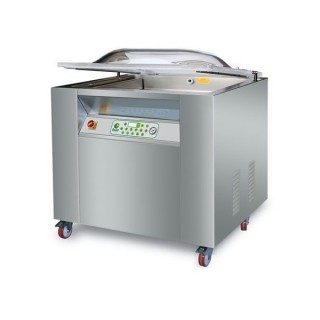
This is where it becomes important to understand how to choose between a
chamber vacuum machine and a bar vacuum sealer,
not for reasons of “professionalism,” but for repeatability of results and long-term reliability.
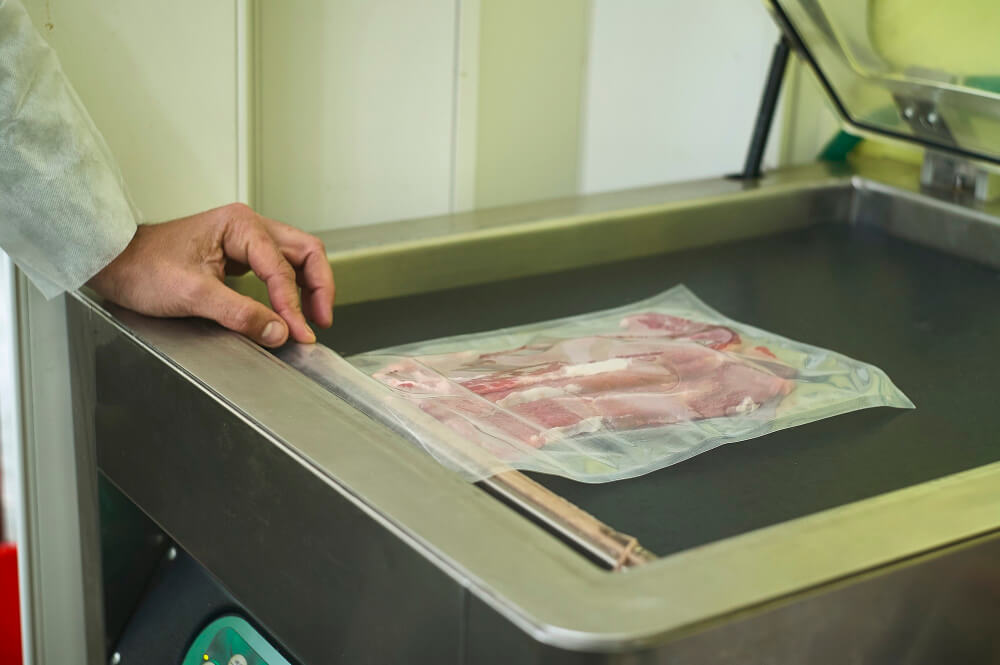
Bags are also part of food safety
From an HACCP perspective, the bag is not a neutral container.
Material, thickness, and compatibility with the machine affect vacuum stability and shelf life.
An unsuitable bag can lead to micro-leaks, unstable vacuum, and shorter-than-expected storage times.
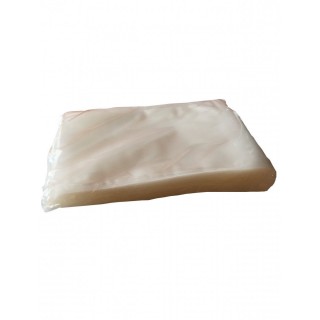
For this reason, it is important to consciously choose between
embossed vacuum bags and smooth vacuum bags,
based on the technology used and the type of processing.
Labeling and management of vacuum-sealed products
A vacuum-sealed product must always be clearly identifiable.
Packaging date, expiration date or best-before date, and storage conditions must be handled carefully.
With vacuum sealing, more than with other methods, traceability becomes central, because storage times are extended and products remain in stock longer.
This is not a formal requirement: it is what allows peace of mind during inspections and in daily operations.
Vacuum sealing and cooking: double attention required
When vacuum sealing is also used for low-temperature cooking, the level of attention increases further.
Bag materials, temperatures, cooking times, and subsequent cooling and storage phases all come into play.
In these cases, it is essential to use
specific sous-vide cooking bags,
designed to operate safely even with controlled times and temperatures, avoiding solutions intended only for storage.
SHOP NOW:
In practice: vacuum sealing is an ally—if managed correctly
Vacuum sealing can improve workflow organization, reduce waste, and enhance service quality.
From an HACCP standpoint, however, it requires operational awareness, not automation.
Proper equipment, suitable materials, and clear procedures make the difference between vacuum sealing that simplifies work and vacuum sealing that introduces unnecessary risks.