




















SHOP NOW:


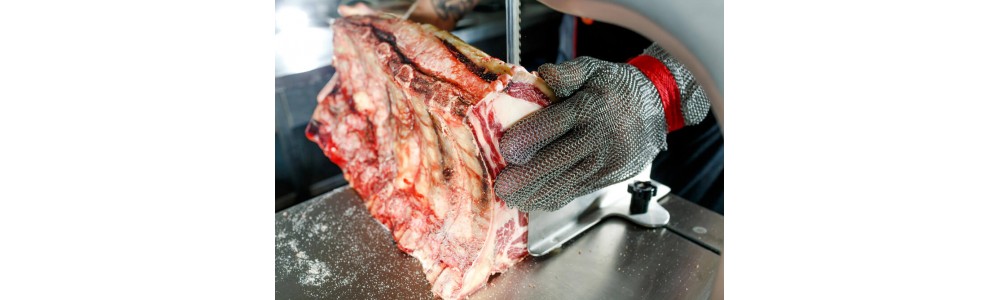
When choosing a professional bone saw, the most common mistake is focusing only on price or size.
In reality, it is blade, power and structure that determine the machine’s performance and its effectiveness in daily operations.
Understanding these elements means choosing a bone saw that fits your laboratory, avoiding operational issues and wasted time.
How to choose a professional bone saw?
To choose a professional bone saw, it is necessary to evaluate blade, power and structure in relation to the type of processing, production volumes and laboratory organization.
SHOP NOW:
What is the role of the blade in a professional bone saw?
The blade is the core of the bone saw.
It determines cutting quality, precision and processing speed.
A suitable blade allows you to:
- achieve clean and precise cuts
- reduce operator effort
- work more safely
The blade must be chosen according to the type of product being processed, especially when handling bones of different sizes.
Blade length and type: what really changes?
Blade length directly affects cutting capacity.
A longer blade allows processing of larger pieces, while a shorter one is better suited for more precise work.
Tooth configuration is also important:
- larger teeth → for harder bones
- finer teeth → for greater precision
These features must be evaluated based on real operations, not just technical specifications.
Motor power: how much does it really matter?
Power is one of the most underestimated aspects.
A bone saw with insufficient power can slow down operations, especially with demanding cuts.
Adequate power allows you to:
- maintain constant speed
- avoid excessive strain
- improve productivity
The choice depends on the type of processing and production volumes, not on a standard value suitable for everyone.
Machine structure: stability and safety
The structure of the bone saw affects stability, safety and ergonomics.
A solid and well-built machine ensures:
- greater control during cutting
- reduced vibration
- longer durability over time
Materials such as stainless steel are essential to ensure resistance and ease of cleaning.
Blade, power and structure: a necessary balance
These three elements should not be considered separately.
A good blade without adequate power is not enough, just as a solid structure without the right blade limits performance.
It is the balance between these factors that determines the machine’s real efficiency.
What is the most important element in a bone saw?
There is no single most important element: blade, power and structure must be balanced to ensure effective performance in daily operations.
How does the bone saw fit into the workflow?
The bone saw is not an isolated machine, but part of a broader process.
Cutting is often an initial phase that precedes other operations.
For this reason, it is important to consider it within the context of the professional bone saw in the butcher shop workflow, where its role is defined according to the operational flow.
Connection with other equipment: why is it essential?
After cutting, the product may move to subsequent processes.
This makes consistency between equipment essential.
In many cases, the bone saw is part of a workflow that also includes processing with professional meat grinders and sausage stuffers in laboratory design, creating a continuous and organized production chain.
When does it make sense to choose a professional bone saw?
The choice makes sense when:
- bone cutting is frequent
- volumes are consistent
- speed impacts workflow
In these cases, comparing professional bone saws for butcher shops helps identify the most suitable solution.
The right choice is the one aligned with real operations
There is no universally best bone saw.
There is the one best suited to the type of processing, production volumes and laboratory organization.
SHOP NOW:
A good bone saw improves the process, not just the cut
When blade, power and structure are well balanced, work becomes smoother, more precise and safer.
And it is this continuity that makes the difference between an organized laboratory and an inefficient one.