

















SHOP NOW:


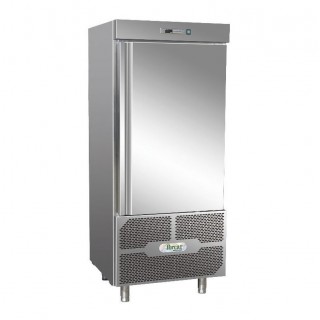


The blast chiller is one of the most important pieces of equipment in a professional food production kitchen, because it has a direct impact on safety, product quality and workflow. Choosing the best professional blast chiller is not just a matter of comparing technical specifications: you need to understand how the machine fits into the workflow of your kitchen. In delicatessens, restaurants and butcher shops, the blast chiller directly affects production times, safety and organisation.
Before you even start comparing models, capacities or brands, it is essential to understand how the blast chiller fits into the design of a delicatessen or butcher shop workspace, where every machine has to work properly alongside the other equipment and the daily workflow. Only by looking at the big picture can you choose a blast chiller that truly meets the production needs of your business.
Blast chillers are a key innovation in the catering and pastry sectors, which is why today they are among the essential pieces of professional equipment in any high-end kitchen. Their technology brings the temperature of food down extremely quickly straight after cooking or preparation, something that goes far beyond what traditional refrigerated counters and cold rooms can do. This means they can rapidly chill both cooked and raw food and keep it in perfect condition, whether it is an elaborate dish or an ingredient waiting to be used.
In this article we look at the features that set a blast chiller apart from conventional cooling methods, give advice on how to choose the right blast chiller for your needs, and explain why choosing a Forcar blast chiller from among the many professional blast chillers available can be particularly worthwhile for food service professionals.
SHOP NOW:
What is a blast chiller?
A blast chiller is an essential piece of food service equipment, designed to cool both raw and cooked food quickly and safely. Unlike a conventional freezer, it is not designed simply for storage, but to bring down the temperature of food within a controlled time, improving safety, quality and workflow.
Sizes and capacities vary considerably: there are compact models as well as larger units designed for professional businesses, from small artisan producers to production kitchens handling higher volumes.
In this guide we focus on professional use, where the blast chiller is an operational tool that has a direct impact on time management and processes.
This role becomes even clearer when you consider the blast chiller as part of food production kitchen design, where managing cold is an integral part of how work is organised.
How a blast chiller works
A blast chiller works in two main modes: blast chilling (positive) and blast freezing (negative).
- Blast chilling (positive): this mode brings the temperature of food down to around 3°C, the same as a fridge. It is ideal for preserving the freshness of raw or freshly cooked food, effectively stopping bacterial growth and ensuring optimal storage. The speed at which the blast chiller lowers the temperature is crucial to preserving food quality, keeping its flavour, texture and nutritional value intact.
- Blast freezing (negative): rather than simply chilling, this mode takes the temperature of food down to -18°C, like a freezer, but much more quickly. This not only freezes food more effectively but also preserves its taste and texture better than traditional freezing methods, because the ice crystals that form are smaller and do not damage the cell structure of the food.
The role of blast chillers in food preservation and preventing bacterial growth
A blast chiller allows food to be kept for longer without any loss of quality. This is possible because it lowers the temperature rapidly, preventing bacteria from forming and multiplying.
Benefits of a blast chiller: why every food service business should consider one
In professional settings such as restaurants, pastry shops, pizzerias and other food businesses, where food safety and quality are a priority and subject to inspections, blast chillers offer food service professionals several benefits:
- a blast chiller is an indispensable professional tool that ensures you always have safe raw ingredients, can store ready-made dishes safely and serve customers dishes and desserts that are both safe and delicious;
- a blast chiller helps food service professionals manage their preparations much more effectively, reducing waste and ensuring products are stored in optimal conditions for a long time.
These machines are therefore an effective way of maintaining the high standards of freshness and hygiene that are essential in the food sector.
Drawbacks and considerations
As top-quality professional equipment built for continuous, long-term use, blast chillers can have some drawbacks for the buyer or user:
- the initial cost: although the benefits last for years, the purchase price can be high in relation to your equipment budget;
- over time, running costs can have a considerable impact on your expenses, especially if the machine needs a lot of maintenance;
- the blast chiller may be large in relation to the space you have available.
How to choose the right professional blast chiller: a buying guide
To make an informed choice of professional blast chiller that suits your needs and is a sound investment for your food business, compare the different models on the following factors:

- Compressor power vs chilling capacity: it is essential to assess the ratio between compressor power and the machine's actual chilling capacity, measured as how many kilograms it can bring from 90°C to 3°C in 90 minutes (blast chilling) and from 90°C to -18°C in 240 minutes (blast freezing). This figure indicates how efficient the blast chiller is and how well it performs.
- Energy consumption and efficiency: looking at the energy efficiency of a blast chiller can help reduce running costs in the long term. Choosing equipment with low energy consumption is vital for significant energy savings. Models from major brands such as Forcar Refrigeration Multiservice tend to be optimised in this respect, combining high quality with energy efficiency. More efficient machines use less energy to chill and freeze food.
- Easy cleaning and maintenance: features that make cleaning and maintenance easier, such as rounded internal corners, removable runners and easily accessible control panels, save time and help maintain hygiene standards.
- Reliability and durability: the manufacturer's reputation, user reviews and the quality of materials and components are all indicators of how reliable and long-lasting a blast chiller will be. A durable, reliable machine reduces the need for repairs and replacements.
- Cost: the price of the blast chiller is a deciding factor. Weigh up the cost against the quality, efficiency and features on offer. Comparing the models available on the market helps you find the option with the best value for money, without sacrificing the performance and reliability needed for professional use.
- Size and capacity: the size of the blast chiller should be in proportion to the space available in the kitchen and the volume of food you expect to process regularly. It is essential to choose a model that can properly handle the expected workload.
- Support and after-sales service: good customer support and efficient after-sales service are crucial for quickly resolving any technical problems or maintenance needs, minimising machine downtime.
In short, as well as technical and functional specifications, assessing operational efficiency, energy consumption and cost are crucial steps in choosing the equipment best suited to a professional kitchen, while ensuring economic and operational sustainability.
In practice, the choice of blast chiller depends on concrete factors such as production volumes, frequency of use, available space and the type of work carried out. An oversized machine can take up space unnecessarily, while an undersized one causes slowdowns and operational problems.
The assessment should also take account of the regulatory and operational context, as explained in our article on when a blast chiller is mandatory.
Why a Forcar blast chiller could be the best solution for certain food service businesses
One brand that guarantees quality and professionalism is Forcar Refrigeration Multiservice. Every Forcar blast chiller shares the strengths the manufacturer brings to all its professional equipment. In addition, some specific features make this particular machine especially attractive to professionals.
The Forcar blast chiller: features and details of a professional kitchen tool
In this context, Forcar blast chillers are a well-balanced solution for many professional businesses, thanks to a good balance of performance, ease of use and affordability.
Forcar Refrigeration Multiservice is one of the best of the many brands that manufacture and sell professional blast chillers.
The Forcar blast chiller range includes several models, such as the 5-tray, 10-tray and 15-tray Forcar blast chillers, and ranges from blast chillers for positive chilling only to models that also offer blast freezing.
The main general features of a Forcar blast chiller can be summarised as follows:
- Material: made of 18/10 AISI 304 stainless steel, for strength, durability and easy cleaning.
- Finish and design: "Scotch-Brite" satin external finish, adjustable feet for greater adaptability and an internal cabinet with rounded corners for easier cleaning.
- Insulation: 60–70 mm thick insulation with 42 kg/m³ high-density foam, ensuring effective temperature retention and optimised energy consumption.
- Capacity and compatibility: internal runners designed to hold GN 1/1 or 60x40 cm trays, offering versatility in everyday professional use.
- Additional features: a core probe to measure the temperature at the centre of the product (for blast chilling), a door micro-switch that stops the evaporator fan, electronic controls for precise management of operating cycles, and manual drainage of defrost water.
- Operating cycles: 4 operating cycles, adapting to different chilling and freezing needs.
These features make the Forcar blast chiller an extremely efficient, versatile machine suited to intensive professional use, ensuring food safety and the quality of your preparations.
In day-to-day practice, these features mainly affect continuity of work and time management in the kitchen.
An overview of the most popular Forcar blast chiller models among food service businesses
Here are some of the Forcar blast chiller models:
- 10-tray blast chiller, model AS1110N
- 15-tray blast chiller, model AB5514
- 3-tray blast chiller, model AB1203
- 3-tray blast chiller, model G-T3
- Blast chiller, model AS1104N
The best buy: the Forcar blast chiller
In conclusion, blast chillers are an essential resource for any food business that wants to raise the safety and quality standards of the food it prepares. They are strategic medium- to long-term investments for standing out in the competitive food service market. It is therefore crucial to examine the many options available carefully and select the one that best matches your operational and quality needs.
In this context, buying a blast chiller from the Forcar brand stands out as the ideal choice, as it offers advantages over many other brands on the market. Thanks to its advanced technology, energy efficiency, durability and ease of use, a Forcar blast chiller not only delivers superior performance but also a significant return on investment, helping your business stand out for quality and innovation. Choosing Forcar for your next blast chiller is a step forward towards culinary excellence and customer satisfaction.
The choice of blast chiller should always be part of a broader view of the blast chiller's role in food production kitchen design, where every piece of equipment contributes to the overall balance of the process.