




















SHOP NOW:
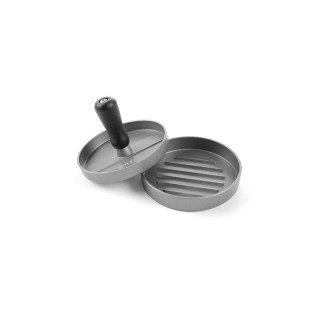

When it comes to hamburger production in a professional setting, the choice of hamburger press is often considered secondary.
In reality, it is a decision that directly affects workflow organization, production speed, and the quality of the final product.
The hamburger press is not a standalone machine, but a specific stage in a process that starts with meat processing and ends with a product ready for sale or cooking. This logic is part of the design of a food laboratory, where each piece of equipment must be integrated into the workflow.
When is a professional hamburger press really needed?
A professional hamburger press is necessary when hamburger production is continuous or requires standardization, as explored in the article dedicated to when a manual hamburger press becomes necessary.It allows you to obtain uniform portions, improve production speed, and ensure consistent quality over time.
In the food laboratory, it comes into play after grinding performed with professional meat grinders for butcher shops, transforming the product into a defined shape ready for the next stage.
The role of the hamburger press in the workflow
The hamburger press must be consistent with the production process.
It is not chosen based on the final product, but on how work is carried out every day.
In many cases, processing starts from larger cuts prepared using a professional bone saw in the butcher’s laboratory, continues with grinding, and ends with forming.
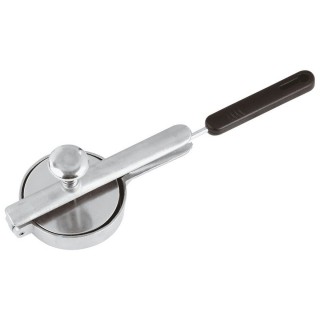
Manual hamburger press: features and use
The manual hamburger press is ideal when volumes are limited and production is not continuous.
It allows direct control over the product and is perfect for artisanal contexts.
In daily operations, it is mainly used when production is limited or variable.
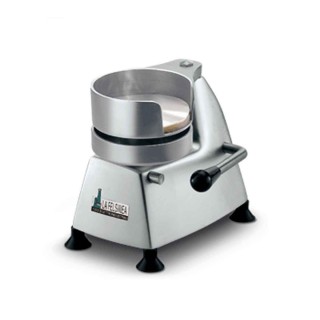
Automatic hamburger press: when it becomes necessary
The automatic version becomes necessary when production is high and consistent.
It reduces processing time, increases productivity, and ensures uniformity.
It is particularly useful in laboratories with structured workflows.
How to choose between manual and automatic?
The difference between manual and automatic is not only technical, but operational.
The choice depends on production volume, frequency of use, and laboratory organization.
There is no universally better solution, only the one that best fits your specific context.
The role of grinding in the final result
The quality of the hamburger directly depends on the grinding process.
Meat that is processed unevenly makes it harder to obtain a compact and consistent product.
For this reason, the choice of hamburger press should always be evaluated together with the work carried out using the meat grinder.
How important is product standardization?
Standardization means producing identical hamburgers every time.
This is essential both in retail and in food service.
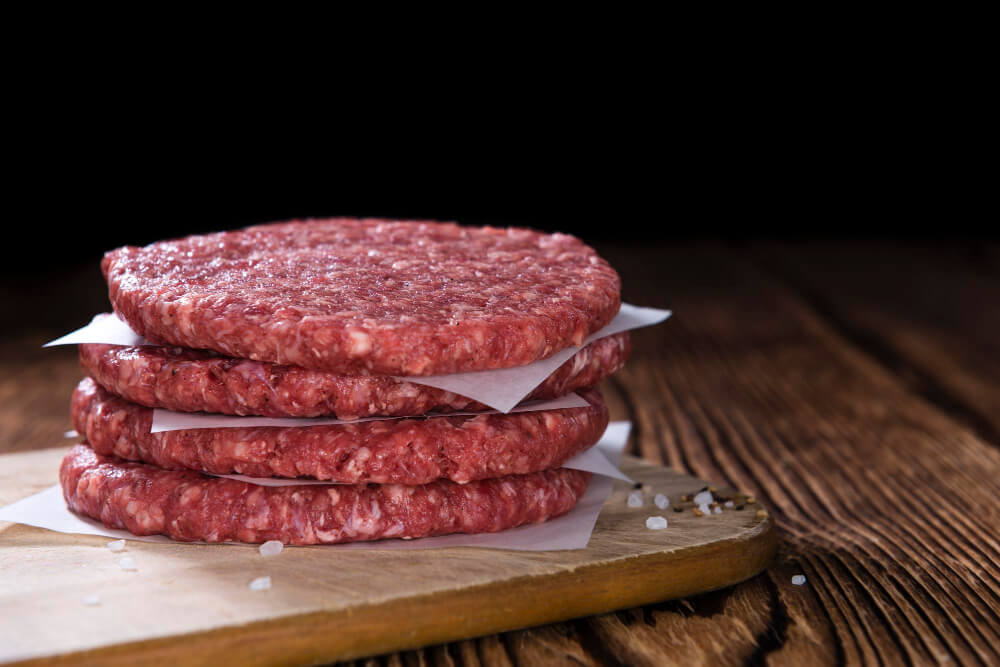
A hamburger press, or patty former, allows you to maintain consistent weight, shape, and quality over time.
Integration with subsequent processing stages
After forming, temperature management becomes essential, especially when the product is not used immediately.
This aspect is explored in the role of blast chillers in the food laboratory, which help preserve quality and safety.
How to choose the right hamburger press for your laboratory?
The choice should start from three elements:
- production volumes
- frequency of use
- workflow organization
Only then does it make sense to compare professional hamburger presses to identify the most suitable solution.