






















SHOP NOW:

In the daily work of a butcher shop or food laboratory, preparing hamburgers is not just about grinding meat.
The real difference lies in the forming stage, where precision, method, and equipment come into play.
A well-made hamburger is not random: it is the result of a consistent process, starting from the raw material and leading to a uniform and recognizable product. This approach is part of the design of a food laboratory, where each stage must be organized to support the final result.
Why is the shape of the hamburger so important?
The shape directly affects cooking and product perception.
A uniform hamburger cooks evenly and ensures consistent results.
In professional work, this translates into greater control and higher perceived quality by the customer.
Standardizing the forming process: the role of the hamburger press
To obtain uniform hamburgers, it is necessary to standardize the forming stage, as explained in the article dedicated to when a manual hamburger press becomes necessary.
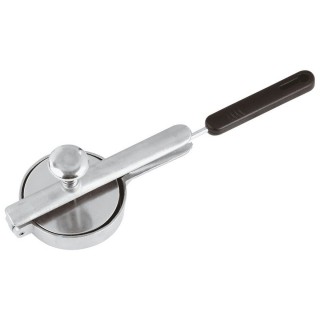
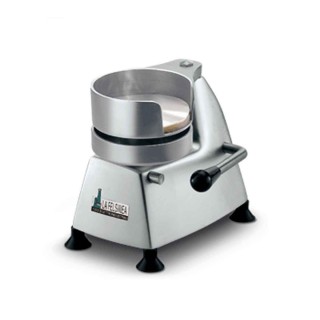
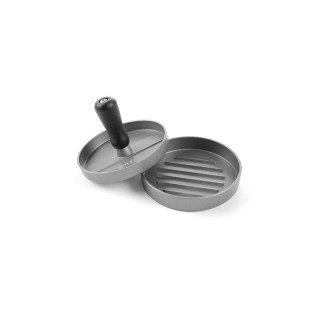
This is only possible by using a professional hamburger press, which ensures consistent weight and shape.
In the laboratory, this stage follows grinding performed with professional meat grinders for butcher shops, which defines the base of the product.
The weight of the hamburger: an often underestimated technical factor
Weight is one of the most important elements for ensuring uniformity.
Hamburgers with different weights cook differently and compromise the final quality.
A hamburger press, or patty former, allows you to obtain precise portions, improving product standardization.
How to achieve the right consistency?
Consistency determines the structure of the hamburger and its performance during cooking.
Incorrect consistency leads to products that fall apart or are too compact.
This depends on both grinding and the forming stage.
The role of grinding in the final result
The quality of grinding is crucial.
Unevenly processed meat makes it difficult to obtain compact and consistent hamburgers.
For this reason, the work carried out with the meat grinder must always be consistent with the next stage.
From raw material to finished product: the complete process
Quality does not start with the hamburger press, but before.
In many cases, processing begins with larger cuts prepared using a professional bone saw in the butcher’s laboratory.
This step directly affects the quality of the raw material and the final result.
Hamburger press or patty former: does it really make a difference?
From an operational standpoint, the term makes little difference: the hamburger press, also called a patty former, is the tool used to shape and structure the product.
The real difference lies not in the name, but in the type of machine and its ability to adapt to the laboratory workflow: from manual solutions for small volumes to more advanced systems for continuous production.
Common mistakes in hamburger preparation
The most common mistakes are:
- inconsistent weight
- non-uniform manual forming
- incorrect grinding
Using the right equipment reduces these issues and improves overall quality.
What happens after forming?
After forming, the product must be managed correctly.
If it is not used immediately, temperature control becomes essential.
This aspect is explored in the role of the blast chiller in the food laboratory, which helps preserve safety and quality.
How to choose the most suitable solution for your laboratory?
The choice of equipment depends on:
- production volumes
- type of processing
- workflow organization
For this reason, it is useful to evaluate professional hamburger presses, choosing based on real operational needs.
Perfect hamburgers: a matter of process
A good hamburger is the result of a correct sequence:
- cutting
- grinding
- forming
- storage
When all these stages are consistent, the result is a product with stable quality.
SHOP NOW:
The difference lies in repeatability
In professional work, quality is not just about achieving a good result once, but about being able to replicate it consistently over time.
A hamburger press ensures uniformity, improving efficiency and workflow organization.