

























Professional Extractor Hoods: the complete range for commercial kitchens
Welcome to our category dedicated to professional extractor hoods, a wide and comprehensive selection of products for anyone working in professional and industrial kitchens. In our catalogue you will find wall-mounted extractor hoods with or without a built-in motor, island hoods, snack hoods and cubic hoods, all fitted with efficient labyrinth filters, along with many other versatile, professional solutions designed to meet every need and suit any food service setting – restaurants, bars, canteens and production kitchens.
Our extractor hoods are designed to provide powerful, continuous extraction of smoke, steam and odours: the professional choice for anyone looking for reliable, HACCP-compliant restaurant hoods, and an ideal kitchen hood for bars, pizzerias, canteens and production kitchens too.
Our extractor hoods
- Wall-mounted hood with motor 2000x900 with 2 labyrinth filters
- Wall-mounted hood 1600x900 with 2 steel labyrinth filters
- Wall-mounted hood 1000x900 with 2 steel labyrinth filters
- Wall-mounted hood 1200x900 with 2 steel labyrinth filters
- Wall-mounted hood 1400x900 with 2 steel labyrinth filters
- Snack wall-mounted hood 1200x900 with 3 steel labyrinth filters
- Snack wall-mounted hood 1400x900 with 3 steel labyrinth filters
Frequently asked questions about extractor hoods
What types of restaurant hoods are there?
The main types are wall-mounted hoods (with or without a built-in motor), installed against the wall above the cooking surfaces; central or island hoods, suspended from the ceiling above central cooking blocks; snack hoods, which are compact and suited to small spaces such as bars and sandwich bars; and cubic hoods, ideal for ovens and special settings. The choice depends on the kitchen layout and the type of equipment to be covered.
How do you choose the right kitchen hood for your premises?
To choose the right hood, consider the extraction rate (m³/h), which must be proportionate to the cooking area and the power of the burners; the size of the hood relative to the cooking surface (it should overhang slightly on all sides); whether or not it has a built-in motor; and compatibility with the exhaust or filtration system. In a professional kitchen it is also essential to keep safe distances from open flames.
What is the difference between a wall-mounted hood and an island hood?
A wall-mounted hood is installed against the wall and extracts fumes from one side only, making it ideal when the cooking blocks are lined up along a wall. A central (or island) hood, by contrast, is suspended from the ceiling above a central cooking island and extracts on several sides. An island hood generally needs a higher extraction rate precisely because it does not benefit from the containing effect of the wall.
What are labyrinth filters for and how often should they be cleaned?
Labyrinth (or baffle) filters capture the grease and particles in cooking vapours, protecting the motor and the ductwork and reducing the risk of fire. They should be cleaned frequently, roughly once a week or more often with heavy frying: they are made of stainless steel and can be washed in a dishwasher or by hand with a degreaser. Proper maintenance of hood filters keeps extraction efficiency high.
Do you need a hood with a built-in motor, or is an external motor better?
A hood with a built-in motor is the simplest, most straightforward solution, suitable for small and medium-sized premises with short ducts. An external motor (or remote extractor fan) is recommended for large kitchens, long duct runs or when you want to reduce noise in the dining room, as the extraction unit is located away from the working area. The choice depends on the required extraction rate, the length of the exhaust run and acoustic comfort.
What material are professional extractor hoods made of?
Professional hoods are made of stainless steel (typically AISI 304), a sturdy material that resists corrosion and heat, is easy to sanitise and meets HACCP food hygiene requirements. The labyrinth filters are also made of stainless steel. This ensures a long service life and excellent resistance in the humid, greasy and steamy environments typical of food service.
Which hood should you choose for a bar or a small snack counter?
For bars, sandwich bars and small snack stations the ideal solution is a snack hood or a compact wall-mounted hood, often fitted with a built-in motor and several labyrinth filters to handle griddles, fryers and toasters in tight spaces. It is important to size the hood to the cooking surface and check whether fumes can be exhausted outdoors or, alternatively, to consider dedicated filtration systems.

-320x320.jpg "WALL HOOD 1000X900 WITH 2 STEEL LABYRINTH FILTERS")


-320x320.jpg "WALL HOOD SNACK 1800X900 WITH STEEL LABYRINTH FILTERS")


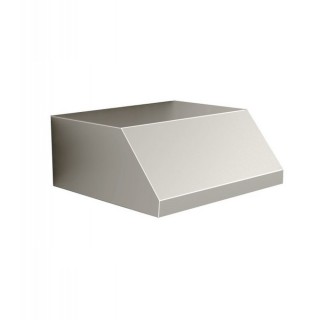

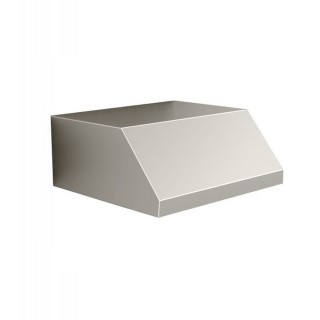
Professional extractor hoods for your restaurant kitchen: remove odours and fumes and keep the workplace healthy
Professional extractor hoods play a crucial role in industrial and professional kitchens. It is not simply a matter of removing unpleasant smells: these appliances extract and filter cooking fumes which, if not properly managed, can become harmful to health and create an unhealthy, uncomfortable environment for staff. That is why it is essential to choose an extractor hood carefully, assessing your needs and technical requirements, to ensure a hygienic and safe workplace.
Types of extraction hoods for professional kitchens
Our online shop offers several types of extractor hoods, each suited to specific needs:
- Wall-mounted extractor hoods: perfect for perimeter installations, available as snack hoods (for low-emission equipment such as griddles and fryers) and cubic hoods (particularly elegant, ideal for large spaces and open kitchens).
- Island extractor hoods: designed for large professional kitchens with cooking stations in the middle of the room. They offer excellent extraction capacity, especially when combined with external extractor fans.
- Condensation hoods without a flue: the perfect solution when a flue cannot be installed. These hoods use innovative condensation systems to break down fumes and drastically reduce harmful emissions, fully meeting the safety and hygiene rules set by local and health authorities.
The importance of materials and quality standards
Professional extractor hoods must be made from high-quality materials and strictly comply with current regulations. All the hoods available in our online shop are made of 18/10 stainless steel, known for its corrosion resistance, ease of cleaning and hygiene. They also carry CE marking and meet the highest quality and safety standards.
Correct, safe installation and maintenance
Hoods should be installed about 2 metres above the floor and should overhang the edge of the equipment below by about 20–25 cm. Regular maintenance and thorough cleaning are also essential to prevent grease build-up that could cause fires.
How to choose the right extractor hood for your needs
When choosing an industrial extractor hood, several factors should be considered:
- Size of the space and the kitchen: measure the available area carefully to make sure the hood properly covers all cooking stations.
- Type of equipment used: fryers, griddles, ovens and grills require different extraction capacities.
- Volume of air to be extracted: carefully assess the hood's extraction power in relation to the volume of air to be handled.
- Configuration of the existing system: choose models with or without a built-in motor, depending on whether external extractor fans are present.
Why buy professional extractor hoods from Cornerchef?
Cornerchef is your online point of reference for professional catering equipment. Here is why you should choose us:
- Wide range of models: easily find the hood that best suits your needs among the many professional kitchen extraction hoods in our catalogue.
- Certified high quality: products selected and guaranteed in accordance with current regulations.
- Specialist support: professional assistance before and after the sale, to ensure your complete satisfaction.
- Competitive prices and transparency: reliable products on favourable terms.
Contact us now for further information and advice on choosing the new extractor hood for your business!