

























Bread dough mixers
An efficient, practical bread dough mixer that produces smooth, even, perfectly proved dough for outstanding bread is an essential tool in any bakery, and something many home bakers want too. In this section you will find high-quality bread dough mixers in a range of capacities. Choose the one that suits you!
Dough mixers: what they are for
A professional dough mixer is a machine that lets you make many different types of dough at high speed without compromising quality. It makes preparing bread and any other dough (pizza, bread, focaccia, biscuits) quicker and simpler. Thanks to their practicality and ease of use, they are in great demand.







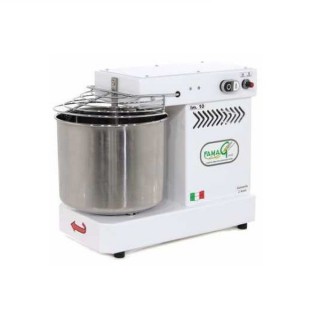
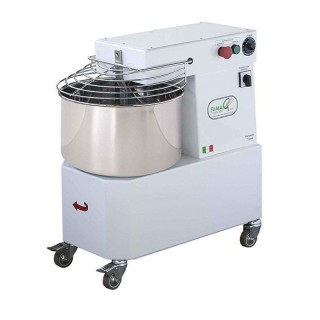
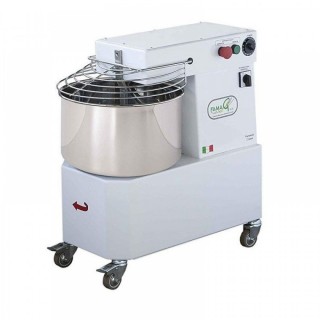
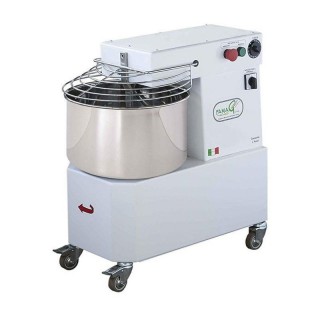
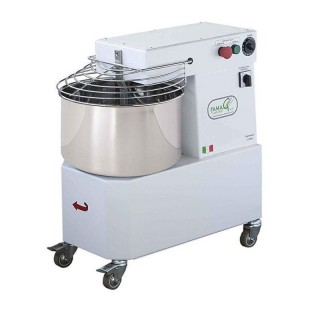
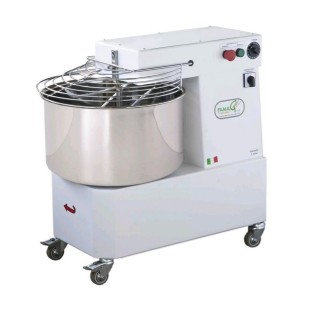
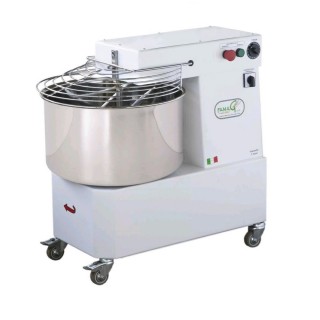
Bread dough mixers: types
A dough mixer has a bowl, removable or fixed, available in different capacities from 5 kg upwards, and a continuous rotating movement in which arms of various shapes mix and knead the ingredients. Several types of bread dough mixer are available, and they differ mainly in how much heat they transfer to the dough by the end of mixing.
- Planetary mixers (the most popular for home use) are very versatile and efficient because they can take several types of attachment. Their elliptical movement produces a very smooth, even dough, although it transfers a high amount of heat to it.
- Fork mixers: fitted with a fork-shaped kneading arm; they are the slowest and least productive, but they can knead doughs with a low water content and transfer the least heat to the dough.
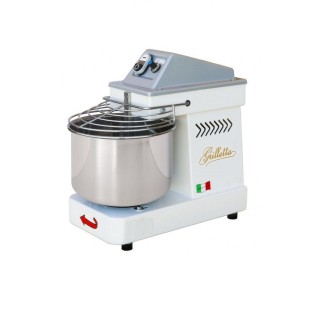
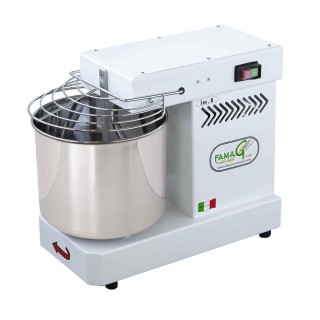
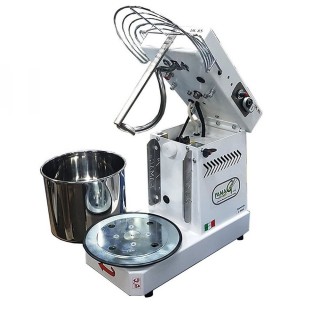
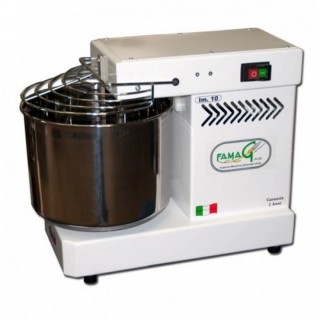
- Spiral mixers (by far the most widely used in pizzerias) are less versatile than the others but have the advantage of a powerful motor that produces excellent dough at remarkable speed. They were in fact designed to cut mixing times considerably in industrial production, and they work any type of dough through the continuous action of a spiral-shaped arm that presses the dough from top to bottom, transferring more heat to the finished dough than any other type of mixer.
- Diving arm mixers: two arms create a circular, vertical movement similar to kneading by hand; they are designed for very high-hydration doughs, giving greater oxygenation and therefore more volume in the finished product, although mixing times are long and costly.
What to consider when choosing the right dough mixer:
- the intended use;
- power;
- mixing action;
- energy consumption;
- materials;
- stability;
- speed;
- dimensions.