

























SHOP NOW:



Using the same slicer in a butcher's shop and in a delicatessen may seem logical, but in practice it often leads to impractical compromises.
The two settings have different rhythms, products and goals, and these directly affect how the slicer is used.
SHOP NOW:
Why do butcher's shops and delicatessens work differently?
In a butcher's shop, the slicer works on raw or minimally processed products, which are often irregular in shape.
In a delicatessen, on the other hand, it is geared more towards customer service, speed and integration with the sales counter.
Ignoring this difference leads to machines that are "fine for a bit of everything" but not truly optimal for anything.
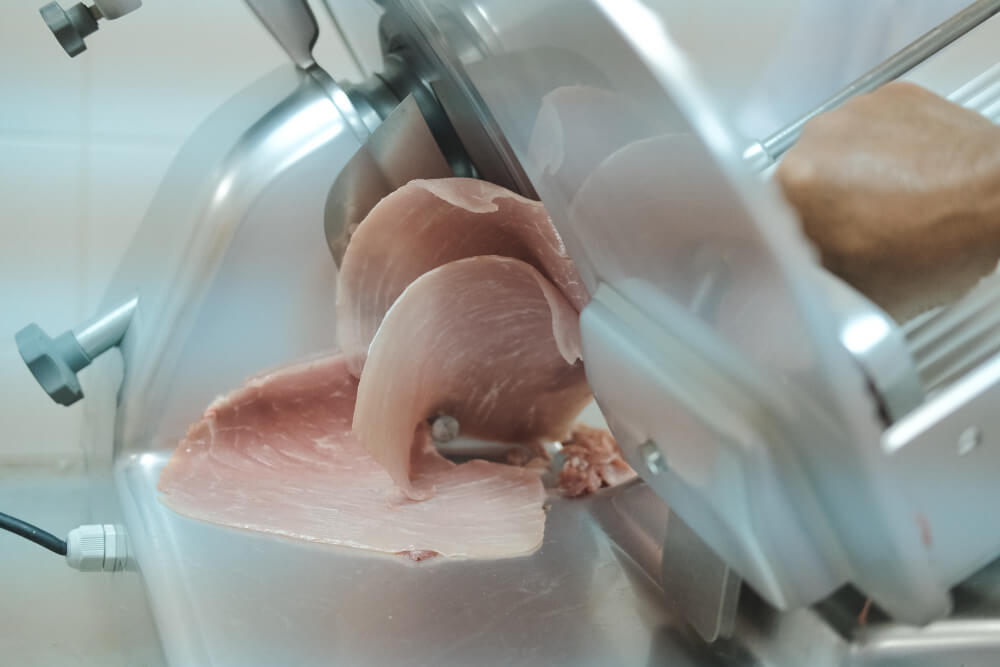
The slicer in a butcher's shop: control and continuity
In a butcher's shop, the slicer is part of the daily production line.
It needs control, stability and the ability to adapt to different products, even when the cuts are not uniform in size.
Here the machine has to follow the work, not the other way round.
The slicer in a delicatessen: speed and service
In a delicatessen, the priority is speed and ease of use.
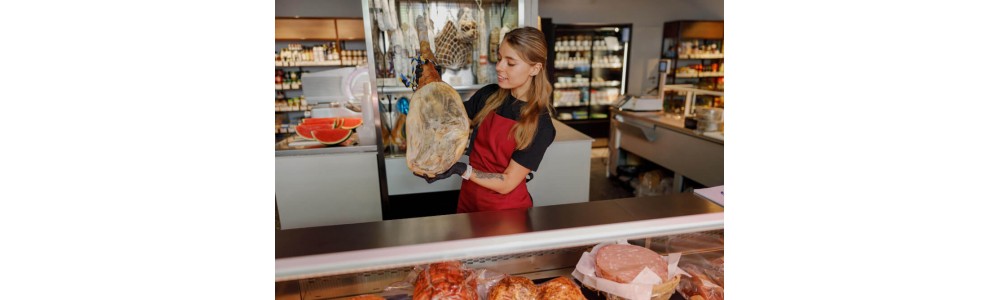
The slicer often works in full view of customers and must allow smooth service, especially at the busiest times.
How does the setting affect the technical choice?
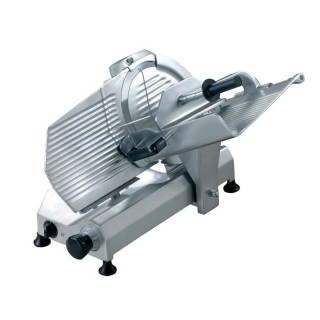
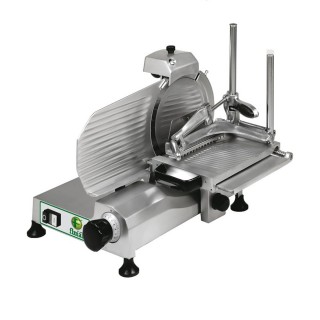
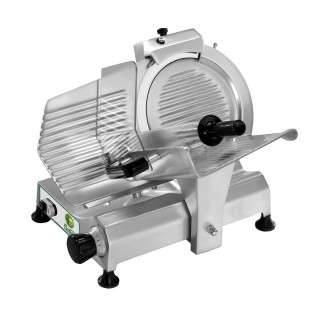
The technical choice changes with the operating context, as already explained in our article on the operational differences between gravity and vertical slicers.
When does it make sense to choose by sector?

Only once you have established whether your business is geared towards butchery or delicatessen work does it make sense to compare the commercial slicers best suited to your workshop.
That way the machine becomes an ally in your daily work, not a limitation.
The right slicer is the one that fits the setting
There is no universal machine.
There is the one that fits best into the real work and the type of service you offer.
And in the long run, that is what makes the difference.