

























SHOP NOW:
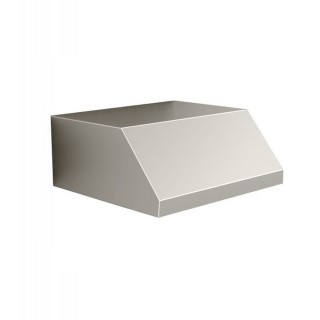


A commercial extractor hood is a crucial part of any restaurant kitchen: often underestimated, but vitally important. It is not simply an accessory, but a complete air management system that has a profound effect on hygiene, safety and the quality of the working environment, and therefore on the whole restaurant business. Choosing the right hood means investing in the wellbeing of your staff, in food safety and in compliance with strict industry regulations. The purchase decision must take the applicable rules into account, but it must also reflect the operational and structural characteristics of your own kitchen. Likewise, regular maintenance and thorough cleaning, in line with the regulations, are essential to keep the hood efficient over time and to maintain the required hygiene and safety standards. Only then can you guarantee an optimal working environment and full compliance.
SHOP NOW:
What an extractor hood does and why choosing the right one matters
The extractor hood in a commercial kitchen has several functions, all essential to the smooth running of the business. First and foremost, it removes smoke, steam and odours released while food is cooking. Without an adequate extraction system, these would spread through the room, permeating the air, the surfaces and even clothing, creating an unpleasant and potentially unhealthy working environment.
The extractor hood also makes a significant contribution to safety. Cooking fumes can contain particulates, grease and other substances which, as they build up in the ducts and filters, considerably increase the risk of fire. An efficient system prevents this build-up and keeps the kitchen safer for staff.
Another key benefit concerns food hygiene. By extracting smoke and steam, the hood reduces the spread of particles that could settle on food and contaminate it. A well-ventilated room is also less prone to condensation and mould, which can compromise the quality of ingredients and finished dishes.
Finally, do not underestimate the impact on air quality and staff comfort. A working environment free of excessive smoke and lingering odours is healthier and more comfortable, which supports the wellbeing of your team and, in turn, their productivity. Choosing the right hood is therefore an investment in the health and efficiency of your staff.
What the regulations say about restaurant extractor hoods
 The food service sector is subject to strict food hygiene and safety rules, and commercial extractor hoods play a central role in complying with them. Regulation (EC) No 852/2004 on the hygiene of foodstuffs states that food premises must allow adequate maintenance, cleaning and disinfection, minimise airborne contamination and prevent the build-up of dirt. Although it does not mention hoods directly, it is clear that installing them and keeping them working properly is essential to meet these requirements.
In Italy, the workplace health and safety code, Legislative Decree 81/2008, treats extraction devices as necessary protection systems for kitchen staff. Article 237 requires employers to organise work so as to avoid the emission of harmful agents and, where this is not possible, to remove them as close as possible to the point of emission by means of local extraction. This underlines the obligation to install efficient, suitable hoods.
The Italian Legislative Decree 155/97, which introduced the HACCP system (Hazard Analysis and Critical Control Points), sets specific hygiene rules that require extraction systems to be properly cleaned and sanitised. Under EU food safety rules and HACCP, regular maintenance and cleaning of hoods is therefore a fundamental requirement for food safety and for preventing risks to consumers' health.
As for installation, the guidance generally indicates a height of about 2 metres from the floor and an overhang of 20-25 cm beyond the edge of the cooking equipment below. The hood must also be sized to suit the volume of the room and the power of the cooking appliances in use, with enough extraction capacity to renew the air effectively.
Maintenance and cleaning are not just good practice but genuine legal obligations. A build-up of grease and residue in the filters and ducts not only reduces the hood's efficiency but is also a serious fire hazard and a potential source of contamination. It is therefore essential to follow a regular, thorough cleaning schedule, as set out in the regulations and in the manufacturers' recommendations.
How to choose the right restaurant hood
Choosing the ideal extractor hood for a restaurant means considering two sets of factors: objective ones, linked to compliance with the regulations in force, and subjective ones, closely tied to the specific needs of your business.
From an objective point of view, it is essential to make sure the hood is CE marked and meets the quality standards required by law. Sizing is another  crucial aspect: the extraction capacity must suit the volume of the kitchen and the type of equipment used. As a general rule, the hood should be able to extract at least 10 times the total volume of the kitchen per hour. It is also important to consider the type of hood in relation to the kitchen layout:
- Wall-mounted hoods are ideal for kitchens with cooking equipment along the walls and come in various depths and lengths. Snack versions suit moderate smoke production, while box-shaped (cubic) hoods are designed for larger or open kitchens and also have greater visual impact.
- Central hoods, also known as island hoods, are designed for large kitchens with central cooking islands and provide effective extraction over the whole area.
- Ductless condensation hoods are a solution when a flue cannot be installed: they purify the air and return it to the room after filtering it.
- Cylindrical hoods and compensating versions with built-in air supply are the obvious choice when the premises do not allow a dedicated make-up air system, or when in an open kitchen appearance matters as much as extraction capacity.
Each type affects sizing, footprint and installation cost: before choosing, it is worth comparing the dimensions, airflow rates and configurations actually available in the range.
From a subjective point of view, the choice should be based on the layout of the space, the main type of cooking and the production volume. The size of the hood (width and depth) must adequately cover the cooking area below, overhanging it by about 20-25 cm all round. Appearance can also be a factor, especially in open kitchens. Finally, the option of a hood with or without a built-in motor, complete with light and speed controller, can affect practicality and installation costs.
At what height should a hood be installed in a commercial kitchen?
The lower edge of the hood is usually positioned between 1.90 and 2.10 metres from the floor, and in any case 60-75 cm above a gas hob or 50-65 cm above an electric or induction hob. Any lower and it becomes awkward to work, with a risk of touching hot surfaces; any higher and the hood loses its ability to capture steam.
The height is not, however, a fixed figure set by a single national standard: it depends on the equipment below, the ceiling height and the local hygiene regulations (in Italy, those of the municipality). The design of ventilation systems in commercial kitchens refers to the EN 16282 series of technical standards, which defines sizing criteria rather than one measurement valid for every case.
Why the distance differs between gas and induction
On a gas hob, the open flame produces a wide, turbulent column of heat: more distance is needed so the hood and filters are not exposed to excessive temperatures. With induction, the heat stays in the pan and the steam rises more vertically, so the hood can be lower and capture it better.
The overhang matters as much as the height
The hood should extend beyond the perimeter of the equipment below by about 15-20 cm on each side. This is the most common mistake in kitchens fitted into tight spaces: a hood the same size as the cooking block is chosen so that it fits, and the steam escapes at the sides.
When height is not the problem. If the kitchen fills with smoke even though the hood is correctly installed, check the make-up air before changing the height. A hood extracting 3,000 m³/h in a room with no equivalent air supply cannot extract: there is no air to move, and raising or lowering it changes nothing.
What happens if you get it wrong. A hood installed too high to gain headroom lets steam and grease spread into the room: the grease settles on walls, ceiling and equipment instead of in the filters. The consequence is not just a hygiene issue: grease built up outside the duct is the main cause of kitchen fires, and if there is a claim, the insurer will dispute a non-compliant installation.
How to clean and maintain the hood
Regular cleaning and maintenance of the extractor hood are essential for its efficiency, safety and compliance. In general, it is important to distinguish between routine maintenance, which kitchen staff can carry out daily or weekly, and periodic deep maintenance, which requires more thorough work by professionals.
Routine maintenance should include wiping the outside of the hood daily with a damp cloth to remove splashes and surface residue. The grease filters must be cleaned regularly, ideally every week, or more often if the kitchen is used intensively. Most metal filters can be washed in a dishwasher with degreasing detergents. Make sure the filters are completely dry before refitting them. Once a month, it is advisable to inspect the fans for grease build-up.
Deep maintenance should be scheduled periodically, usually every 3-6 months, and involves thorough cleaning of the extraction ducts and the motor. This often requires specialist firms with the equipment and products needed to remove the most stubborn grease deposits and to check that every component of the system is working correctly.
Cleaning requirements can vary with the type of hood:
- For wall-mounted and island hoods, as well as cleaning the filters regularly, pay attention to the edges and corners where grease tends to accumulate most.
- Compensating hoods require maintenance of both the extraction and the air supply system, with monthly cleaning of the filters and quarterly cleaning of the complete system, including the airflow sensors.
- Laminar flow hoods need gentle cleaning so as not to compromise their aerodynamic design: avoid abrasive products.
- Induction hoods require specialist maintenance to protect the electronic components: avoid using too much water.
- A ventilated ceiling is a special system that requires professional, preventive cleaning programmes: thorough cleaning every 3-6 months depending on use, attention to scale and grease deposits, filter cleaning every 1-2 weeks and periodic inspection of the ducts.
It is essential to keep a detailed log of all cleaning and maintenance, retain the reports of periodic inspections and make sure staff are properly trained in the daily maintenance procedures.
Why an efficient extraction system matters in your commercial kitchen
In conclusion, an efficient, well-maintained extraction system is a cornerstone of any successful restaurant business. Choosing the hood carefully, in full compliance with the regulations and in line with the specific needs of the kitchen, together with regular maintenance and meticulous cleaning, not only ensures a healthy and safe working environment, but also contributes to food quality, staff wellbeing and the overall image of the venue. Investing in a quality extraction system and managing it properly is a crucial step towards operating within the law and offering a positive experience to both employees and customers.
For a safe and reliable purchase of your commercial extractor hood, browse the full range of commercial kitchen extractor hoods on Cornerchef.it.