

























SHOP NOW:



Who doesn't love pizza? From its homeland it has travelled to every corner of the world, and anyone who has tasted it (properly made pizza, of course!) loves it.
But what makes pizza so good and so special? And what can make one pizza even better than another? A long-running debate claims it is the oven it is baked in, and that a pizza baked in a wood-fired oven is always better than one baked in an electric oven. But is that really true? Or is it just a widespread, widely accepted myth that always casts electric pizza ovens as second best? In this article we explain the key differences between wood-fired ovens and professional electric pizza ovens, and show why a pizza baked in an electric oven can, in fact, be just as good.
SHOP NOW:
Electric vs wood-fired pizza ovens: a comparison
When comparing electric and wood-fired ovens for pizza, it is important to consider several factors that affect baking and the final result. Here is how the two types of oven compare on a few key points, to help you make the right purchase:
Wood-fired pizza oven
The wood-fired oven is the original pizza oven, traditionally built from stone. It dates back to the 5th century BC, when the ancient Greeks turned the old vertical-mouthed oven into the dome shape typical of today's wood-fired ovens. Today prefabricated wood-fired ovens are also available, in both masonry and metal. The features we are interested in are: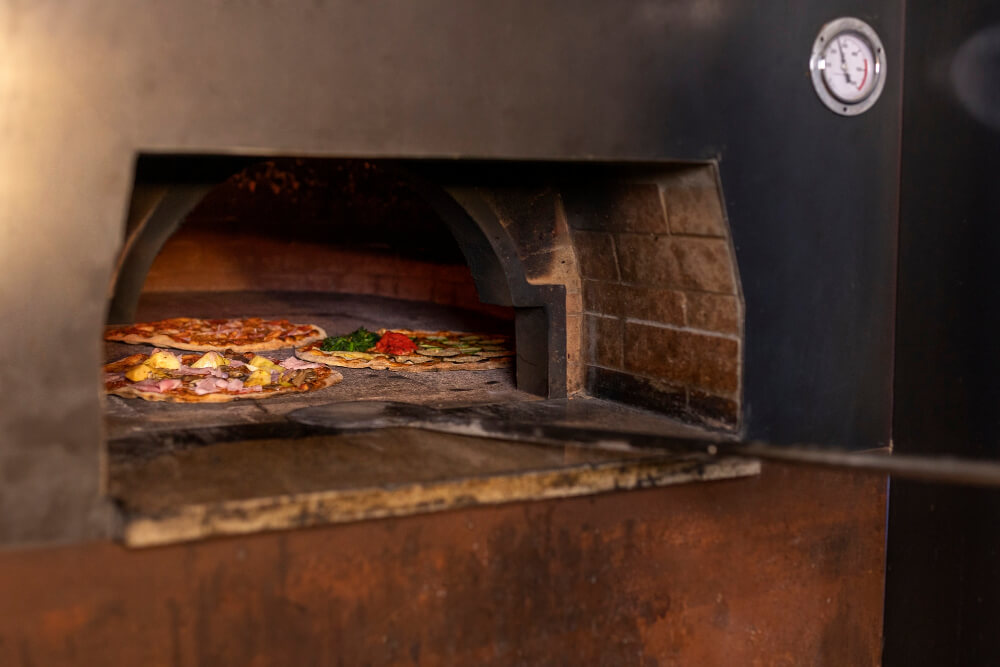
- How it bakes: in a wood-fired oven the pizza is placed on a spot on the oven floor. That spot then cools down because of the moisture released by the dough and because radiant heat is interrupted at that point. As baking continues, the pizzas bake hard until they char slightly. After a few batches you have to stop and let the floor heat up again before carrying on, so use alternates with pauses to bring the oven back to the optimum temperature.
- Baking temperature: it can reach very high temperatures (up to 500°C or more), ideal for authentic Neapolitan pizza, which needs around 450°C for a fast, intense bake.
- Heat-up time: as it is fuelled by wood, it needs some time to reach the optimum temperature (45 minutes or more, depending on how quickly the wood burns and how fast it brings the oven up to working temperature). Once it is there, the temperature must be monitored constantly, both because, as mentioned above, use gradually cools the oven floor, and because wood must be added little by little, in the right quantity, to keep the temperature at or bring it back to around 450°C.
- Flavour and aroma: what a wood-fired oven gives pizza, and no other oven can, is a unique smoky flavour and an inimitable aroma. Many consider this the authentic taste of traditional pizza, and plenty of people frown at the idea that Neapolitan pizza can be baked in anything other than a wood-fired oven.
- Ease of use: a wood-fired oven takes skill and practice: whoever runs it, whether a professional pizza chef or a home cook, must be able to manage the fire and hold the temperature. Wood and ash also need to be handled properly to avoid mess and dirt, which takes time and effort and makes it somewhat harder to use.
- Versatility and space: a wood-fired oven generally needs a fairly large space, both for its size and for storing the wood and the ash waiting to be thrown away. It also needs a flue, so it requires a space where, because of the size of the room, the type of building and local regulations, one can be installed. Usually larger than an electric oven, it suits indoor spaces with the features listed above but also outdoor spaces such as gardens or courtyards. It is not just a pizza oven: it can also be used to cook other foods such as bread and meat.
- Maintenance and cleaning: it needs regular maintenance to remove ash and wood residue, and can be harder to clean than an electric oven.
- Costs: it can be more expensive to buy and install, especially a masonry model. The cost of fuel (wood) is a further factor to consider.
- Sustainability: it burns wood, a renewable natural resource, but combustion can produce smoke and emissions.
SHOP NOW:
Electric pizza oven
The electric pizza oven is the evolution, which began in the 1960s, of the first rectangular-chamber ovens of the early 1800s, which were gas-fired rather than electric. It is heated by elements and is suitable both for home use and for professional use in a pizzeria or other food business.
The features of the electric pizza oven we are interested in are:
- How it bakes: in an electric oven the pizza is placed on a spot on the oven floor. Heat is generated by the heating elements, and depending on how they are arranged and set, the floor and the top of the chamber can be held at different temperatures, easily and consistently controlled with simple controls. This means you can quickly adjust the baking temperature when it is no longer ideal: simply turn up the bottom element, and therefore the heat, as soon as you notice the floor is no longer hot enough.
- Baking temperature: it generally reaches maximum temperatures of around 250–300°C, enough for most home-made pizzas, but it may not fully replicate the result of a wood-fired oven.
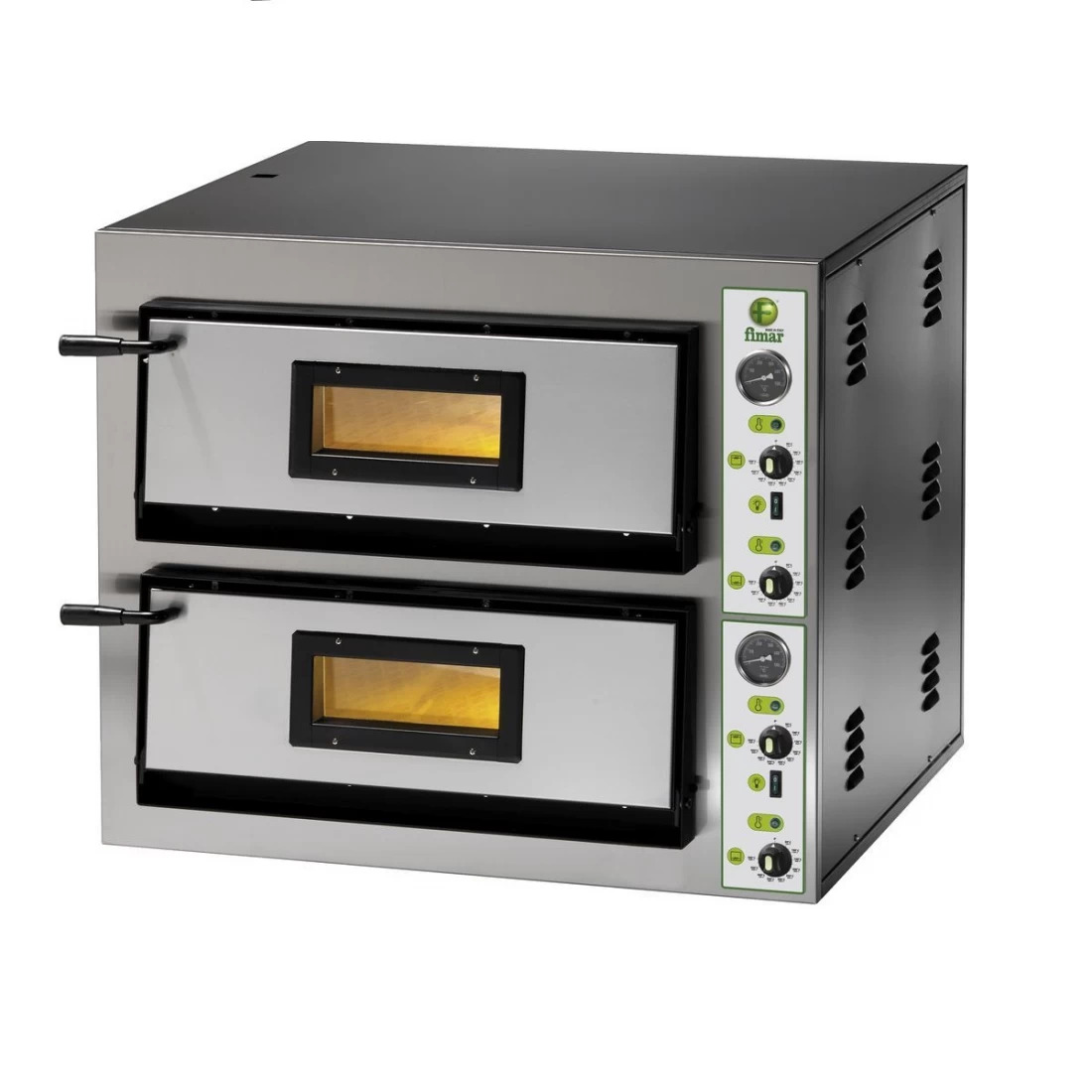
- Heat-up time: it heats up quickly, in about 15–20 minutes, and certainly much faster than a wood-fired oven. Thanks to its heating elements it holds a steady temperature easily, and adjusting it simply means using a few buttons or knobs.
- Flavour and aroma: an electric oven cannot by itself replicate the smoky flavour of wood-fired pizza. Even so, a pizza baked in an electric oven can match a wood-fired one for quality: delicious, with a crisp, well-baked crust.
- Ease of use: much easier to use, with precise temperature controls and simple operation. This makes it suitable even for people with no experience of wood-fired ovens, and pizzerias that adopt one can entrust baking to less experienced staff without the risk of ruining pizzas and disappointing customers. It is easier still because there is no fuel or waste to manage.
- Versatility and space: available in various sizes, including compact models for small kitchens and larger electric ovens for pizzerias. The range of sizes makes electric ovens suitable for both indoor and outdoor use, and there are portable models too.
- Maintenance and cleaning: generally easier to clean, with smooth, removable surfaces. Some models have self-cleaning functions.
- Costs: a wide range of prices, from budget models to high-end ones, with relatively low and predictable running costs and no costs for fuel or waste storage.
- Sustainability: electric pizza ovens use electricity, which may come entirely or partly from renewable sources, depending on the energy mix of the local grid.
How to choose the best pizza oven: professional electric or wood-fired?
Choosing the right oven can transform the way you bake pizza and take it to new levels of quality and excellence. So the question arises: can an electric pizza oven be better than a wood-fired one? It can, but it depends. It depends on your answers when you weigh up each of the factors listed above.
SHOP NOW:
Is a wood-fired oven the best choice? Yes, when…
A wood-fired oven is the better choice, whether you are a lover of traditional cooking or a professional pizza chef, when:
- Space is not an issue: indoors or outdoors, you have room for the oven as well as for the fuel and ash, and you can install a flue.
- Budget is not an issue: the cost of buying and installing it is not a problem, nor is the cost of fuel and ash disposal.
- You know how to use a wood-fired oven: you know how to manage firing it up, the temperature and the baking.
- You prefer pizzas with the classic wood-fired taste: for authenticity and flavour the wood-fired oven is unbeatable, and you don't want to give that up even if it means longer preparation times and more maintenance and cleaning.
Is an electric pizza oven the best choice? Yes, when…
It is better to bake your pizza in an electric oven, whether you are making pizza at home or for the customers of your pizzeria, when:
- You want practicality and versatility: an electric oven offers precise temperature control and ease of use, so even without much experience you can bake pizza with very good results. It also only needs a connection to the mains: no flue and often not even an extractor hood.
- Space is limited: compact electric ovens are the ideal choice if the room you have is small.
- You want to keep costs down without giving up a professional pizza oven: professional electric ovens are available in various price ranges and require no installation costs or time.
Choose your pizza oven
Now that you know an electric oven can produce excellent pizzas, even in large quantities, you can browse our catalogue and choose one for your home or your pizzeria. Here you will find the best Fimar electric ovens, easy to use (watch this video) and easy to maintain.
SHOP NOW: