

























SHOP NOW:

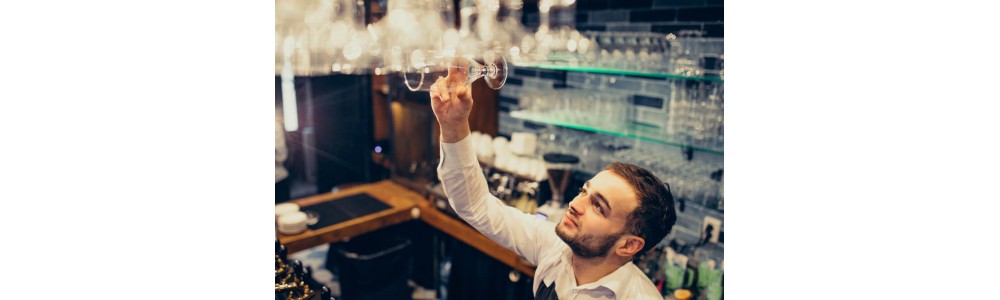
If you have ever worked in a bar during happy hour or in a restaurant during a packed service, you know that a commercial glass washer is not a luxury, it is a vital necessity. Its defining feature? Speed. Wash cycles that last just a few minutes, ready to put glasses and cups back into circulation almost instantly. That is the promise of your commercial bar glass washer. Whether it is a compact countertop glass washer or a built-in undercounter glass washer, have you ever wondered how they manage to be so much faster than a normal dishwasher? (read more here about the running costs and performance of a commercial dishwasher). And, even more importantly, what can you do, day after day, to make sure they keep up that lightning pace without missing a beat (or leaving a smear)? It is not just a question of power, but of specific technology and daily care that makes all the difference.
SHOP NOW:
Why are they so fast? The technology that makes the difference
Behind those ultra-fast cycles that save your evening lies precise engineering. Commercial glass washers are fitted with "muscular" components designed specifically for speed:
- High-pressure pumps: they do not use the same pumps as plate dishwashers. Glass washer pumps are designed to move large volumes of water at high pressure in a very short time, blasting dirt away more quickly.
- Powerful heating elements: water heating, especially between the wash and rinse phases, has to be almost instantaneous. The heating elements are sized to bring the water to the required temperature in a fraction of a second, keeping downtime between cycles to a minimum.
- Optimised hydraulics: the spray arms and nozzles are designed to maximise water coverage and impact on glasses and cups in a short cycle. They do not need to cover a large area as in a big dishwasher, but to concentrate their action in a smaller space with maximum effectiveness.
In short, they are true "racing machines" built for one specific job: washing glasses quickly and well.
Don't just switch off: the essential end-of-service routine
Technology gives you the initial speed, but your daily care is what allows your commercial bar glass washer to keep it up day after day, cycle after cycle. After serving the last customer, it is not enough to switch off the machine and leave: you need to carry out the routine end-of-service clean.
Here is what you should never skip, because it makes a difference:
- Drain and clean the tank: the wash water collects residues. Leaving it standing not only causes unpleasant odours, but the residues on the bottom can be picked up by the circuits in the next cycle.
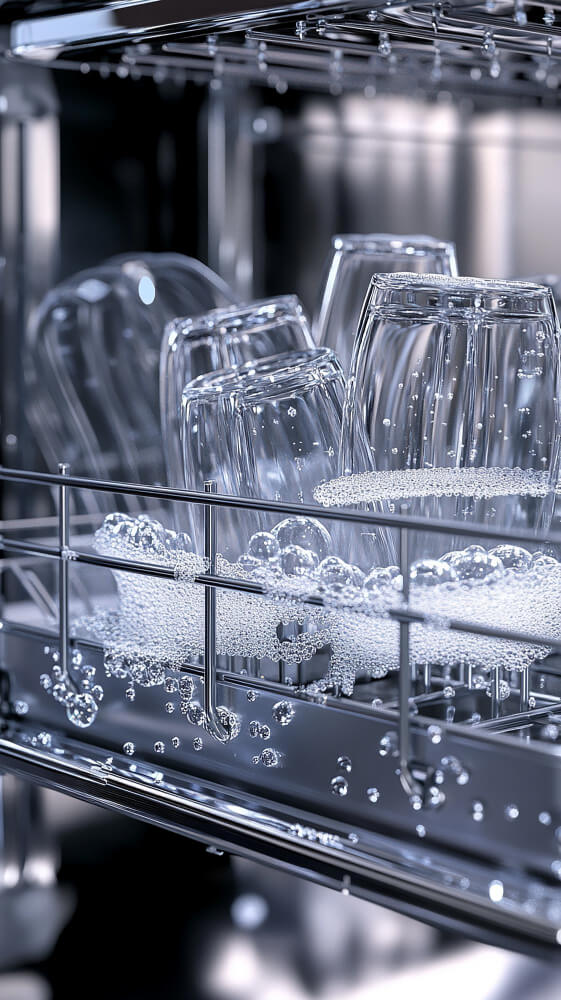
- Clean the filters (yes, every evening!): filters collect food scraps, olive stones and plastic caps that should not be there but always end up inside. If the filters are dirty, the pump has to work harder, pressure drops and the water jet weakens. The result? Slower, less effective washing.
- Keep an eye on the nozzles and arms: while you clean the inside, take a quick look at the small holes in the spray arms. Are they clear? Is anything blocking them? A blocked nozzle means an area of the basket that is not washed properly, forcing you to rewash or clean by hand.
- Leave the door open: it may seem trivial, but airing the inside overnight prevents stagnant moisture from building up, a breeding ground for bacteria and odours.
These steps do not take long, but they are essential for the health and speed of your commercial glass washer.
Ready for a new day: checks when you open
The start of the shift deserves attention too. A few minutes well spent in the morning ensure a day of trouble-free washing for your bar's glass washer:
- A short empty rinse: a quick cycle with water only washes away any dust that has settled overnight or any small residues left behind.
- Check the levels (chemicals and water softener): is there enough detergent and rinse aid to get through the day? Does the water softener (if you use one, and you should!) have salt? Running out of products in the middle of service is a real nightmare.
- Check the water pressure: make sure the water valve is fully open and that the pressure is right for your machine. Low pressure immediately reduces its effectiveness.
Limescale slows everything down: how to protect your machine
We have already mentioned limescale as the cause of streaks and smears, but it is worth repeating: it is the silent killer of speed. It builds up in the pipes, on the heating elements and in the nozzles, slowing down the whole hydraulic and heating system. A water softener is not just about shine, it is about the longevity and speed of your bar glass washer. It is an investment that protects the machine and keeps its "racing" performance going over time.
In conclusion, the impressive speed of commercial glass washers comes from specific technology, but their ability to keep up that pace day after day depends entirely on your attention and daily care. Spending a few minutes maintaining your countertop or undercounter glass washer is the guarantee of a glass washer that is always ready, quick and able to support your venue's service without a hitch.
SHOP NOW: