

























In this section you will find professional pizzeria equipment organised by stage of work: dough, shaping, prep counter, baking, service and takeaway. These are machines and accessories for traditional, pizza-by-the-slice and takeaway pizzerias, from the brands Famag, Fimar, Forcar Refrigeration, Robot Coupe, Gi Metal and Lilly Codroipo.
What you need to equip a pizzeria
1. Dough and proofing
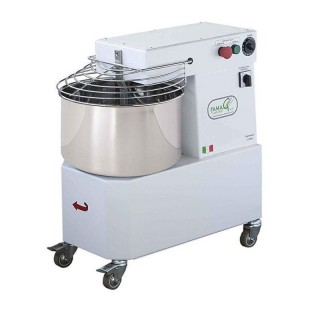
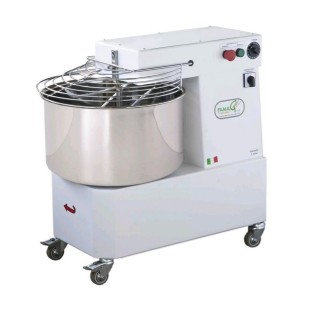
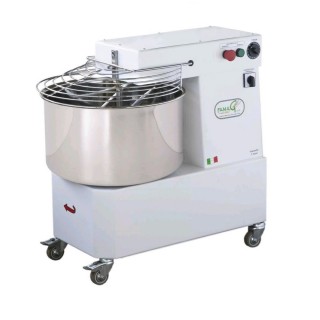
The spiral mixer is the key machine in a pizzeria: it works the dough without warming it and copes with high-hydration doughs too. The range includes Famag mixers from 5 to 50 kg of dough, single-phase and three-phase, including models with a removable bowl or 10 speeds. To prove the dough balls you need stackable pizza dough boxes in the standard 60x40 and 30x40 sizes.
2. Shaping
A pizza dough roller rolls out dough balls in a few seconds to a consistent thickness. It is useful when volumes are high or staff at the counter are few. In the same category you will find Fimar dough sheeters for fresh pasta and pastry sheets.
3. Prep counter
A refrigerated pizza counter combines a worktop with a refrigerator underneath. On top you fit refrigerated topping display cases, which keep toppings at temperature in Gastronorm containers. For mozzarella, an electric mozzarella cutter cuts preparation time: there are Fimar models and the Robot Coupe CL 50 Ultra Pizza.
4. Baking
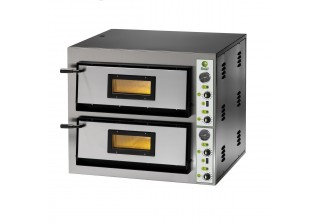
Fimar electric pizza ovens have two stacked chambers. To load and unload the oven you need aluminium pizza peels and turning peels from Gi Metal and Lilly Codroipo, including perforated ones that let excess flour fall away. Brushes for cleaning the oven floor are in pizzeria accessories.
5. Service and takeaway
For deliveries you need thermal bags and boxes that keep pizza hot in transit. For pizza by the slice there are pizza baking trays, while pizza cutter wheels and serving trays are in pizzeria accessories.




How to choose the main equipment
| Equipment | What to look at | Practical guidance |
|---|---|---|
| Spiral mixer | Kg of dough per batch | With dough balls of about 250 g, 10 kg of dough makes around 40 pizzas. |
| Pizza oven | Number of chambers and pizzas per chamber | 4+4 means two chambers holding 4 pizzas each; 6+6 two chambers holding 6. |
| Pizza counter | Static or ventilated refrigeration | Ventilated for busy service and frequent door opening; static for gentler cooling. |
| Power supply | Single-phase or three-phase | Single-phase 230 V if the premises have no three-phase supply; three-phase 400 V for multi-chamber ovens and heavy use. |
| Peels | Material, perforation and size | Perforated aluminium: lighter and sheds flour. The blade size follows the pizza diameter. |
Equipment by type of pizzeria
- Traditional pizzeria: spiral mixer, refrigerated counter with topping display case, deck oven, round peels.
- Pizza-by-the-slice shop: pizza baking trays, rectangular peels, a larger-capacity mixer for tray-baked doughs.
- Takeaway pizzeria: thermal bags and boxes, enough dough boxes for the day's production.
For a complete guide, read how to equip a modern pizzeria. If you are unsure which model to choose, message us on WhatsApp at +39 333 687 8297.
Frequently asked questions
What equipment do you need to open a pizzeria?
You need a spiral mixer, dough proofing boxes for the dough balls, a refrigerated pizza counter with an ingredient display case, a pizza oven, pizza peels and turning peels and, if you deliver, thermal bags or boxes. On top of these come the items every professional kitchen needs, such as a blast chiller and a dishwasher.
What capacity should a pizzeria mixer have?
Capacity is measured in kg of dough per batch. With dough balls of about 250 g, a 10 kg mixer makes around 40 pizzas per batch and a 20 kg mixer around 80. It is worth choosing one slightly larger than you need, so you are not always working with a full bowl.
Static or ventilated pizza counter: which should I choose?
A ventilated counter spreads the cold evenly and recovers its temperature faster when the doors are opened often, so it suits busy service. A static counter cools more gently and dries out stored products less.
What does 4+4 or 6+6 mean on pizza ovens?
It tells you the number of oven chambers and how many pizzas fit in each. A 4+4 oven has two stacked chambers holding 4 pizzas each, a 6+6 has two chambers holding 6 pizzas each.
Single-phase or three-phase: which should I choose?
Single-phase machines plug into a 230 V socket and cover the smaller models. Three-phase machines run on 400 V and are the most common choice for higher-powered equipment, such as multi-chamber ovens; several large mixers are available in both versions. Before buying, check what power supply your premises have.
How are shipping costs calculated?
Shipping costs depend on the weight of the goods and the delivery location, and are shown during checkout before payment.