





















09 Apr
0
2258
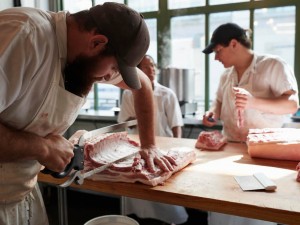
When designing a food laboratory, the blast chiller is one of the pieces of equipment that most significantly impacts time management, product safety, and overall workflow organization.
It is not an accessory machine, but a critical control point that connects production, storage, and service.
For this reason, the blast chiller should not be added ..
06 Apr
0
1312
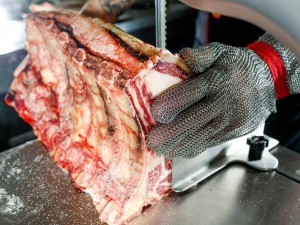
When choosing a professional bone saw, the most common mistake is focusing only on price or size.
In reality, it is blade, power and structure that determine the machine’s performance and its effectiveness in daily operations.
Understanding these elements means choosing a bone saw that fits your laboratory, avoiding operational issues and wasted ti..
02 Apr
0
1823
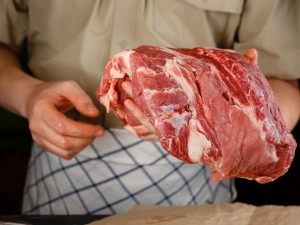
The professional meat grinder is often considered a piece of equipment “for butcher shops,” but in practice it is also used in many delicatessen laboratories.
The critical point is not where it is used, but how it is used and integrated into the workflow.
Butcher shops and delicatessens have different needs, and treating them the same way almost al..
30 Mar
0
1948
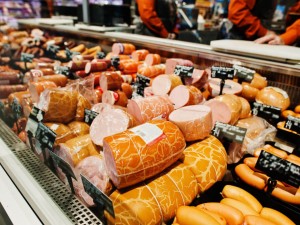
Talking about professional sausage stuffers without distinguishing between artisanal butcher shops and industrial production often leads to poor choices.
These two realities have very different goals, rhythms, and operational logics, which directly affect the type of machine, its size, and work organization.
Understanding these differences is essen..
26 Mar

0
902
Using the same slicer in a butcher's shop and in a delicatessen may seem logical, but in practice it often leads to impractical compromises.
The two settings have different rhythms, products and goals, and these directly affect how the slicer is used.[{}]
Why do butcher's shops and delicatessens work differently?
In a butcher's shop, the slicer wor..
23 Mar

0
2091
Cleaning a professional meat grinder is one of the most delicate activities in butcher shops and food laboratories.
Not because it is complex in itself, but because it is often underestimated, treated as a routine task rather than as a critical phase of the production process.
Many issues of non-compliance, contamination, or waste arise precisely f..
20 Mar

0
1919
Cleaning a professional sausage stuffer is not a secondary task, but a critical phase of the production process.
Mistakes or superficial practices at this stage directly affect food safety, product quality, and compliance with HACCP procedures.
Many issues that emerge during inspections or in day-to-day laboratory management do not depend on the ma..
16 Mar
0
2245
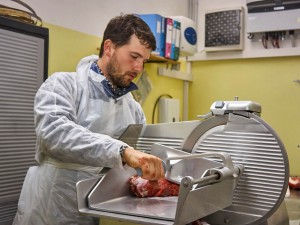
The slicer is one of the most frequently used machines in a food-processing lab, but also one of those that causes the most workplace injuries.
Not because it is inherently “dangerous,” but because it is often placed in poorly organized environments or used too casually.
In everyday practice, safety is almost always a matter of context.
Why is the ..
12 Mar
0
1352
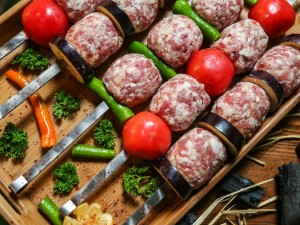
When evaluating a professional meat grinder, attention often focuses on motor power.
In reality, feed opening, grinding plate, and power work together, and considering them individually almost always leads to choices that are poorly aligned with real-world use.
In the daily routine of a butcher shop or food processing lab, it is the balance between..
09 Mar

0
1970
When evaluating a professional sausage stuffer, one of the most underestimated aspects is the cylinder capacity.
Attention often focuses on the operating system or the brand, but capacity is what determines work pace, production continuity, and the number of interruptions during stuffing.
Understanding what really changes between a small cylinder a..
04 Mar
0
1977
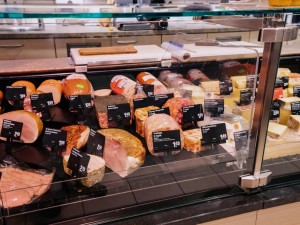
When it comes to professional slicers, blade diameter is one of those aspects that is often chosen “by feel.”
In everyday practice, however, this is exactly the parameter that makes the difference between smooth work and a continuous series of small slowdowns that, by the end of the day, really add up.
It is not a technical detail: it is an operati..
02 Mar

0
2027
When choosing a professional meat grinder, one of the first decisions concerns the machine configuration: countertop grinder or refrigerated meat grinder.
On paper, the difference may seem purely technical, but in daily practice it affects work organization, time management, and hygiene control.
Understanding when refrigeration is truly needed—and ..