



















27 Feb

0
1976
When it comes to choosing a sausage stuffer, the first real crossroads is not about brand or capacity, but about the operating system.
Manual sausage stuffers and hydraulic sausage stuffers follow very different operational logics and have a direct impact on productivity, operator fatigue, and work organization.
Understanding these differences is e..
19 Feb
0
2012
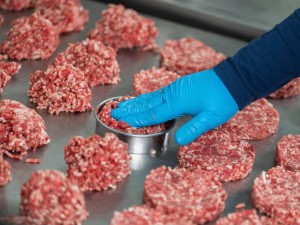
In Italy, ground meat is one of the most requested products at the butcher’s counter.
This often leads to a legitimate question: is a professional meat grinder mandatory in a butcher shop?
The answer requires a fundamental distinction between regulatory obligation and real operational necessity.
Failing to clarify this point leads to misunderstandi..
16 Feb
0
1282
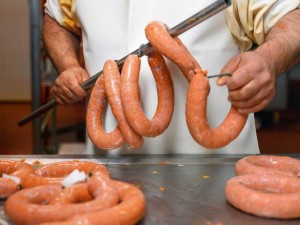
When it comes to professional sausage stuffers, one of the most common questions is whether a butcher's production area really needs one.
Many operators wonder whether a sausage stuffer is a legal requirement or simply an organisational choice linked to the type of production.
The answer is never clear-cut, because a sausage stuffer is not a formal..
13 Feb
0
3159
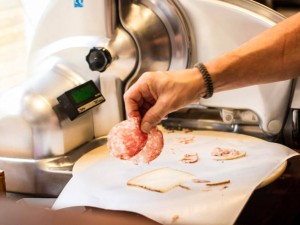
When designing or reorganizing a food laboratory, one of the most frequently asked questions concerns whether a professional slicer is mandatory.
Understanding when it is truly required, when it is simply recommended, and when it becomes an indirect responsibility is essential to avoid design and management mistakes.
In this context, the slicer sh..
09 Feb
0
1889
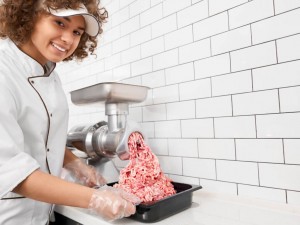
When designing a food laboratory, the professional meat grinder is one of the pieces of equipment that has the greatest impact on overall work organization.
In butcher shops it often represents the heart of processing; in gastronomy and food laboratories it is a key machine for preparing mixtures, fillings, and internal processing.
For this reason..
06 Feb
0
1955
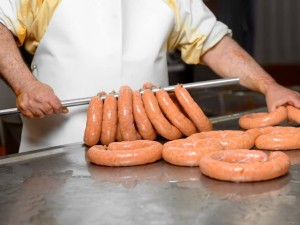
Designing a butcher shop laboratory means organizing spaces and equipment starting from the real work carried out every day.
In this context, the professional sausage stuffer is not an auxiliary machine, but a central processing workstation that directly affects production flows, hygiene, and operational continuity.
Integrating it correctly at the..
03 Feb
0
3155
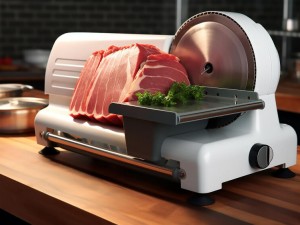
Designing a food laboratory means making decisions that affect productivity, safety, and work quality every single day. Among these, the choice and placement of a professional slicer is never a minor detail: it is an operational hub that involves workflow, space organization, and hygiene.
During the design phase, the slicer should not be considere..
02 Feb

0
2429
In daily operations, vacuum sealing is often perceived as an extra guarantee.
Less air, longer shelf life, better organization. All true—but not automatic.
From an HACCP perspective, vacuum sealing does not eliminate risks; it changes them.
Understanding how responsibilities and operational precautions change is essential to using this technique c..
20 Jan
0
1966
When addressing the design of a deli or butcher shop laboratory, refrigerated display cases and refrigerated counters cannot be considered accessory elements or added at a later stage.
On the contrary, they are part of the functional structure of the laboratory and directly affect workflow efficiency, food safety, product quality, and operational ..
20 Jan
0
1386
Professional smoking is often perceived as a process capable of adding value to a product and differentiating the offer. In the operational reality of a deli or a butcher shop, however, it is not a decision to be taken lightly.
Integrating smoking means adding a processing phase that affects organization, food safety, and time management.
This arti..
19 Jan
0
1669
The blast chiller is one of the most important pieces of equipment in a professional food production kitchen, because it has a direct impact on food safety, product quality and the way work is organised. Before comparing models, capacities or brands, it is essential to understand how the blast chiller fits into the design of a delicatessen or butch..
10 Dec

0
1982
Designing a delicatessen or butcher shop workspace means creating a functional, safe, and regulation-compliant working environment, capable of supporting daily production without slowdowns.
Good planning is not only about walls and systems, but above all about the selection and layout of professional equipment, which directly affect workflows, hygi..