




















SHOP NOW:




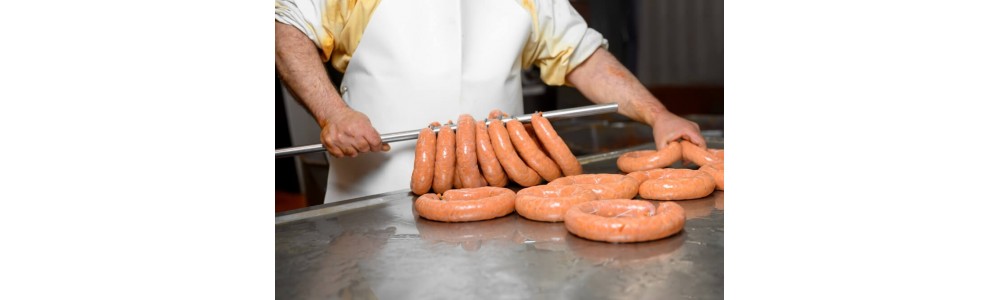
Designing a butcher shop laboratory means organizing spaces and equipment starting from the real work carried out every day.
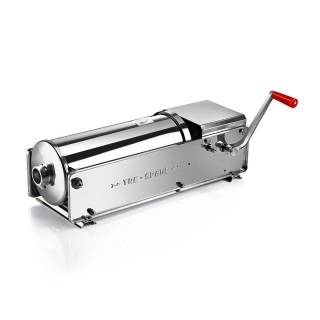
In this context, the professional sausage stuffer is not an auxiliary machine, but a central processing workstation that directly affects production flows, hygiene, and operational continuity.
Integrating it correctly at the design stage helps avoid later adjustments that often compromise efficiency, safety, and overall order in the laboratory.
What is the role of the sausage stuffer within the laboratory?
The sausage stuffer operates during the product transformation phase, when the mixture moves from preparation to its final form.
For this reason, it almost always works in continuity with the meat grinder, forming a single processing line, where grinding and stuffing must be conceived as consecutive phases rather than disconnected operations, as is the case in the design of the butcher shop laboratory equipped with a professional meat grinder.
At which stage of the design process should the sausage stuffer be planned?
The sausage stuffer should be planned already at the layout stage, together with the other processing equipment.
Adding it after the project is finalized often leads to cramped spaces, disorganized workflows, and difficulties in hygienic management, especially when production becomes continuous.
This approach follows the same logic applied to professional equipment in food laboratory design, where each machine is conceived according to the overall work cycle.
Where should the sausage stuffer be correctly positioned in the layout?
The sausage stuffer should be positioned between the grinding area and the portioning or packaging area.
Correct placement reduces unnecessary movements, limits the risk of contamination, and makes work more fluid, especially when phases follow one another without interruption.
This principle is consistent with what happens in the design of laboratory workflows, where each workstation must interact in an orderly way with the next.
How does the sausage stuffer affect work organization?
A suitable sausage stuffer allows for more regular operations, reducing downtime and operator stress.
Conversely, an undersized or poorly positioned machine creates bottlenecks that slow down the entire production cycle, also affecting upstream and downstream phases.
For this reason, work organization should be evaluated before choosing the machine, not after the purchase.
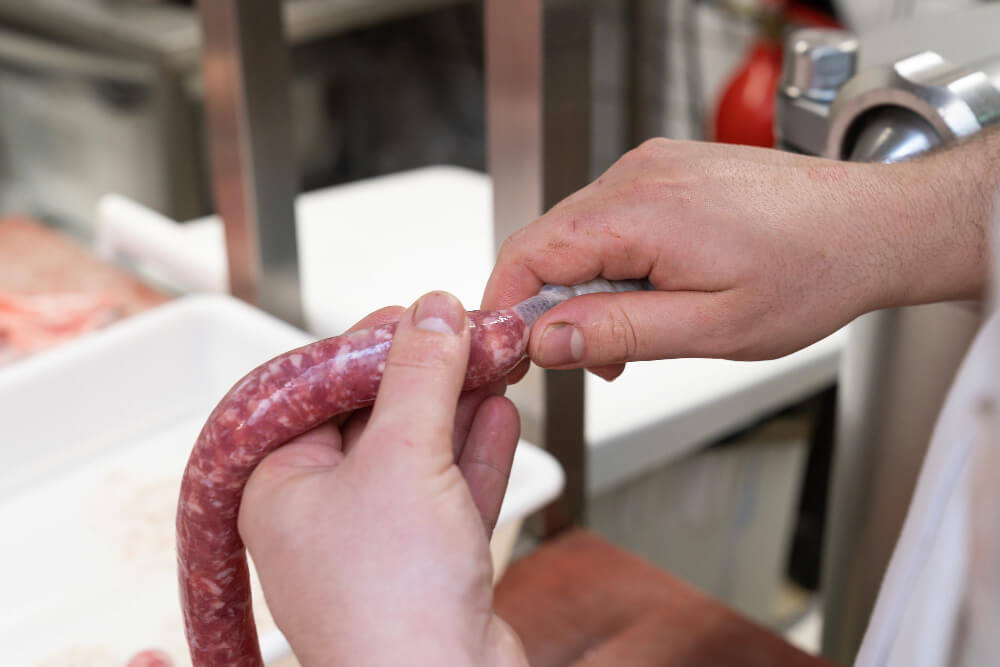
Sausage stuffer and hygiene: why is design crucial?
The sausage stuffer is one of the most sensitive pieces of equipment from a hygienic standpoint.
Disassembly, cleaning, and sanitization must be carried out easily, in adequate spaces and without interference with other processes, especially when producing fresh sausages.
After stuffing, many processes also involve product packaging, often via vacuum sealing: a phase that requires the same level of design attention in terms of hygiene and procedures, as explained in the management of vacuum sealing according to HACCP in the food laboratory.
When does it make sense to move from design to choosing the sausage stuffer?
Only after defining layout, workflows, production volumes, and the type of sausages does it make sense to evaluate the
professional sausage stuffers best suited to your laboratory.
In this way, the machine is not forced into the space but becomes a natural extension of the project.
SHOP NOW:
The sausage stuffer as a design choice, not an isolated purchase
The professional sausage stuffer should not be chosen starting from a catalog, but from the laboratory itself.
Thinking of it as an integral part of the design makes it possible to work in a more orderly, safe, and continuous way, avoiding later adjustments and operational inefficiencies.