





















SHOP NOW:
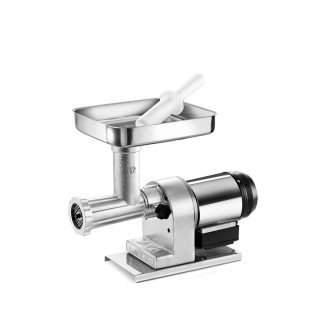
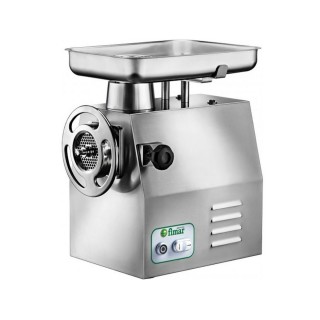

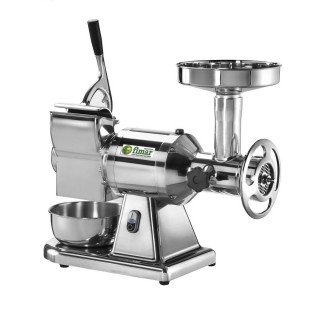



When designing a food laboratory, the professional meat grinder is one of the pieces of equipment that has the greatest impact on overall work organization.
In butcher shops it often represents the heart of processing; in gastronomy and food laboratories it is a key machine for preparing mixtures, fillings, and internal processing.
For this reason, the meat grinder should never be considered a machine to be simply “added,” but rather a structural element of the design.
Why is the meat grinder especially central in butcher shops?
In butcher shops, the meat grinder is used daily on large volumes of raw product.
It directly affects:
- production pace
- mixture quality
- work continuity
- overall laboratory hygiene
An incorrect choice or improper placement of the meat grinder creates chain slowdowns that impact all subsequent stages.
The role of the meat grinder in gastronomy laboratories
In gastronomy laboratories, the meat grinder has a more variable use, but it is no less important.
It is used for:
- internal preparations
- fillings
- ready-to-eat products
- mixed processing involving meat and other ingredients
In these contexts, flexibility and ease of cleaning become just as important as power or output.
At what stage of the design process should the meat grinder be included?
The meat grinder should be included at the layout stage, together with the other processing equipment.
Adding it after the project is finalized often leads to:
- compromised spaces
- disorganized workflows
- sanitation difficulties
This approach is consistent with the overall logic of food laboratory design, where each machine must interact with the entire work cycle.
Meat grinder and processing line: why it never works alone
The meat grinder is almost always connected to other equipment.
In butcher shops it works in continuity with sausage stuffers; in gastronomy it may precede preparation, portioning, or packaging phases.
Thinking of it as a standalone machine is one of the most common design mistakes.
This relationship is evident in the link between the meat grinder and professional sausage stuffers in laboratory design, where both machines must be sized and positioned coherently.
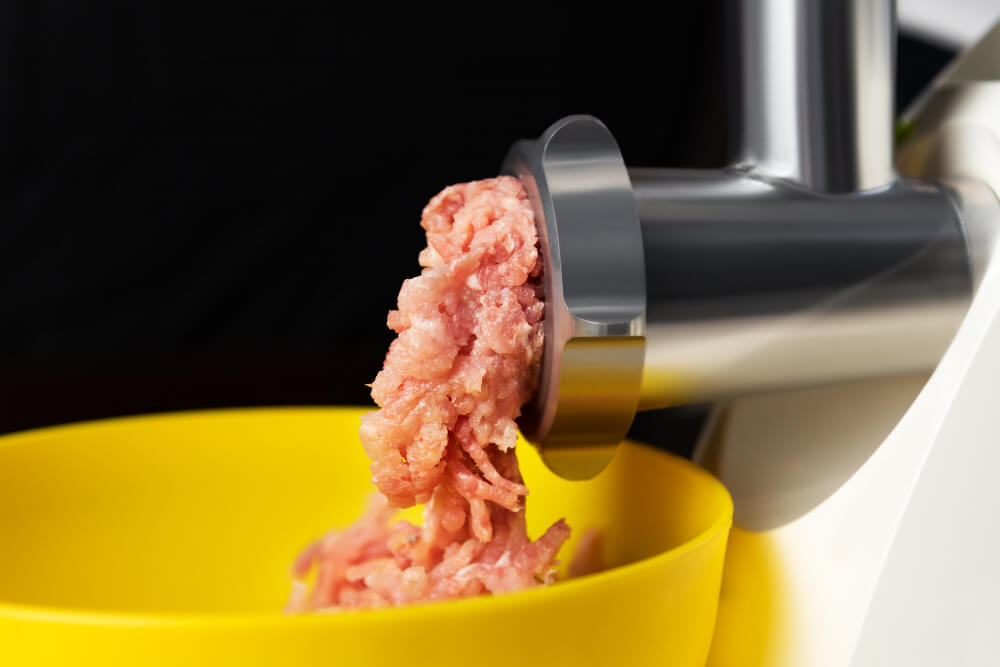
Where should the meat grinder be correctly positioned in the layout?
In butcher shops, when the meat grinder is used several times a day, improper placement forces the operator into constant movement between the workbench and the washing area, slowing down work and increasing the risk of contamination.
The meat grinder should be positioned between the preparation area and the subsequent processing area.
Proper placement:
- reduces unnecessary movement
- improves workbench order
- facilitates cleaning
These aspects directly affect daily efficiency, especially in laboratories with continuous production.
Meat grinder and hygiene: why design makes the difference
The meat grinder is one of the most hygiene-sensitive pieces of equipment.
Disassembly, washing, and sanitization must be possible without obstacles, in adequate spaces and without interference from other processes.
Poor design makes cleaning more complex and increases the risk of contamination, especially when the meat grinder is used multiple times a day.
When does it make sense to move from design to choosing the meat grinder?
Only after defining:
- layout
- workflows
- production volumes
- type of use (butcher shop or gastronomy)
does it make sense to evaluate available models and compare the
professional meat grinders best suited to your laboratory.
In this way, the machine becomes a natural extension of the project rather than a later compromise.
SHOP NOW:
The meat grinder as a design choice, not a catalog purchase
The professional meat grinder should be chosen starting from the laboratory, not from a price list.
When correctly integrated into the design, it improves work organization, reduces downtime, and increases the quality of the final product.
This article represents the core reference pillar for all in-depth content dedicated to professional meat grinders on the Cornerchef blog.