


















SHOP NOW:
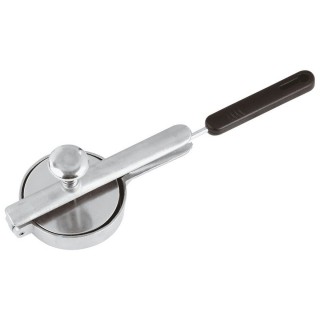
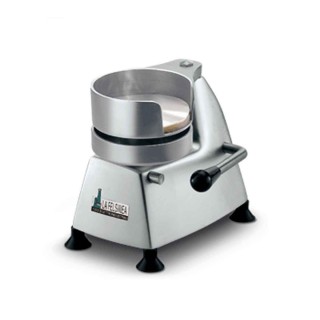
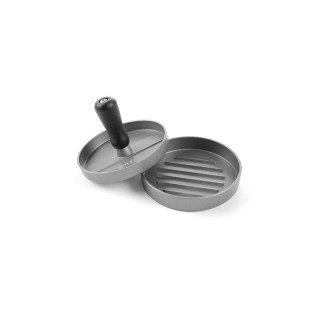

The professional hamburger press is not used in the same way in every context.
Butcher shops and restaurants have different operational needs, and this directly affects volumes, frequency of use and work organization.
Understanding these differences is essential to choosing the right machine and integrating it correctly into the production process, in line with the design of a food laboratory, where every piece of equipment must be integrated into the workflow.
The role of the hamburger press in different contexts
The role of the hamburger press changes depending on the type of business.
In butcher shops, it is often a stable and continuous process, while in restaurants it is more linked to specific or seasonal needs.
This difference directly affects the choice between manual or automatic solutions.
When is a hamburger press really needed?
A hamburger press becomes necessary when burger production is frequent or requires standardization, as explained in the article dedicated to when a manual hamburger press becomes necessary.
It helps improve workflow organization and ensures a consistent product.
In contexts with occasional production, it may be less of a priority.
Hamburger press in butcher shops: continuous and organized production
In butcher shops, burger production is often a daily process.
Here, the hamburger press becomes a central tool to ensure:
- speed
- uniformity
- continuity
The process follows a precise sequence that starts from grinding carried out with professional meat grinders for butcher shops and leads to product forming.
Hamburger press in restaurants: targeted use
In restaurants, the hamburger press is used more selectively.
It is mainly used when:
- fresh burgers are prepared
- custom menus are managed
- focus is placed on raw material quality
It is not always a central machine, but becomes important in structured kitchens.
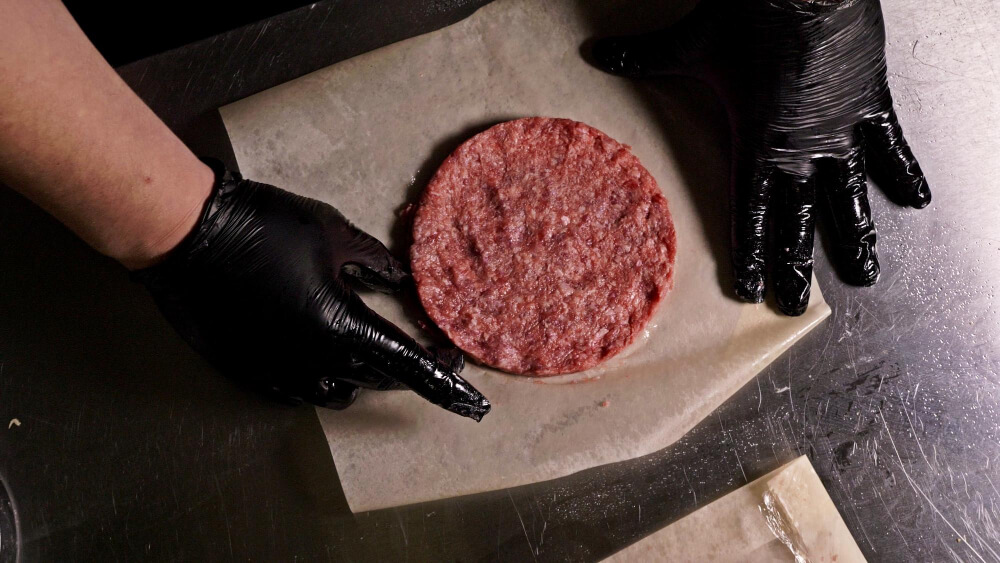
The impact of production volumes on machine selection
Production volume is one of the main factors.
High volumes require more powerful machines, while lower volumes allow for simpler solutions.
In butcher shops, volumes are generally higher than in restaurants.
Integration into the workflow
The hamburger press is positioned after grinding and before sale or cooking.
It is therefore an intermediate stage of the process.
In many cases, production starts from larger cuts prepared using a professional bone saw in the butcher’s lab, continues with grinding and ends with forming, becoming part of a broader process typical of a food laboratory.
Manual or automatic hamburger press: how does the choice change?
The choice between manual and automatic depends on the operational context.
In butcher shops, where work is continuous, an automatic solution can improve efficiency.
In restaurants, a manual option is often sufficient.
Hamburger press vs burger press: operational differences
From a practical standpoint, there is no difference.
The hamburger press, also called a burger press, performs the same function: forming uniform burgers.
The real difference lies in the machine’s features and how it integrates into the workflow.
Product management after forming
After forming, the product must be handled correctly.
If it is not used immediately, temperature becomes a critical factor.
This aspect is explored in the role of the blast chiller in the food laboratory, essential for ensuring safety and quality.
How to choose the most suitable solution for your lab?
The choice must consider:
- type of activity
- production volumes
- frequency of use
For this reason, it is useful to evaluate professional hamburger presses, selecting the solution that best fits your lab.
There is no universal solution
Every laboratory has different needs.
The best choice is always the one most consistent with your operational context.
SHOP NOW:
The hamburger press as an operational choice
When properly integrated into the workflow, the hamburger press improves:
- efficiency
- organization
- product quality
And it is precisely this integration that makes the difference between improvised production and truly professional work.