





















SHOP NOW:




Cleaning a professional meat grinder is one of the most delicate activities in butcher shops and food laboratories.
Not because it is complex in itself, but because it is often underestimated, treated as a routine task rather than as a critical phase of the production process.
Many issues of non-compliance, contamination, or waste arise precisely from repeated mistakes in the day-to-day management of the meat grinder.
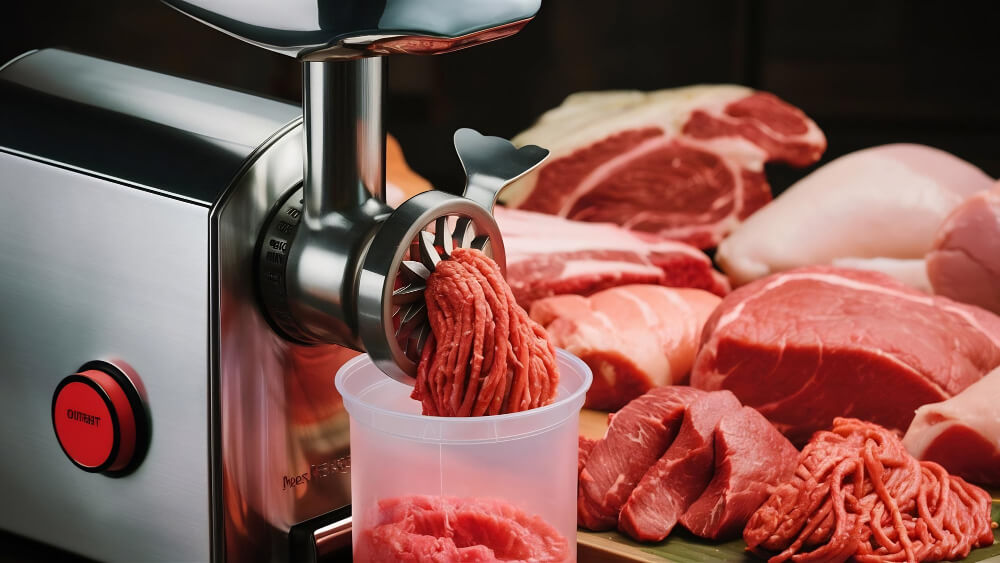
Why is the meat grinder a critical point from a hygiene perspective?
The meat grinder processes raw meat, with articulated internal surfaces and removable parts.
Invisible residues, if not properly removed, can become a favorable environment for bacterial growth.
For this reason, the meat grinder is among the pieces of equipment that require strict and consistent cleaning procedures, not occasional ones.
The most common mistake: cleaning only what you can see
One of the most frequent errors is limiting cleaning to the external surfaces or the immediately visible parts.
The screw, plate, knife, and internal housings are often the points where residues accumulate, especially when the machine is used several times a day.
Incomplete cleaning creates a silent risk that only becomes evident over time.
Disassembling the meat grinder: when it becomes an operational problem
A meat grinder that is difficult to disassemble is almost always cleaned less effectively.
If disassembly takes too much time or is inconvenient, in daily practice there is a tendency to postpone or simplify the procedure.
For this reason, ease of disassembly must be evaluated already during the design of the food laboratory, not after purchasing the machine.
Cleaning and work organization: a direct connection
Cleaning the meat grinder does not depend only on the machine, but on how the work is organized.
Tight spaces, lack of dedicated water points, or interference with other processes make sanitation more complex and less effective.
A proper layout reduces downtime and increases the likelihood that cleaning is carried out correctly and regularly.
The role of HACCP in managing the meat grinder
The HACCP plan does not impose a specific washing method, but requires that the risk be identified and controlled.
For the meat grinder, this means defining:
- cleaning frequency
- disassembly procedures
- operational responsibilities
The same risk-control principle also applies to other critical phases of the laboratory, such as packaging, discussed in vacuum packaging management according to HACCP in the food laboratory.
Cleaning and minced meat production: a delicate balance
When minced meat is produced several times a day, cleaning the meat grinder must be integrated into the operational flow.
Postponing sanitation “until the end of the day” is not always sufficient, especially when different processes or product changes are involved.
Here, cleaning becomes a production phase, not a separate activity.
How does cleaning affect the quality of the final product?
A properly cleaned meat grinder ensures:
- greater product stability
- reduced waste
- lower risk of alterations
Residues or contamination directly affect the perceived quality of minced meat and its shelf life.
When should a meat grinder be evaluated also from a hygiene perspective?
Hygienic evaluation should take place before purchase, not after the first problems arise.
At this stage, it is appropriate to compare the professional meat grinders best suited to your laboratory, considering materials, surfaces, ease of disassembly, and cleaning.
Cleaning the meat grinder: shared responsibility, not improvisation
Sanitizing the meat grinder cannot depend on the goodwill of a single operator.
It must be part of a clear, shared, and repeatable procedure, integrated into the laboratory’s daily routine.
When cleaning is structured, it becomes sustainable even during periods of heavy workload.
SHOP NOW:
Meat grinder hygiene is a design choice
Many hygiene issues do not arise from improper use, but from decisions made upstream.
Design, layout, and machine selection determine how easy it will be to keep the meat grinder clean over time.
This article completes the operational framework of the meat grinder cluster, complementing technical and performance aspects with hygienic and organizational considerations.