



















ACQUISTA ADESSO:
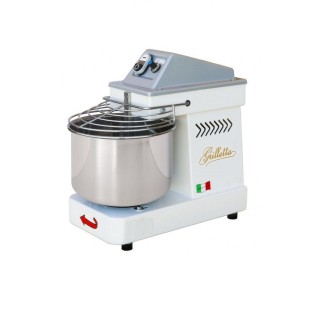
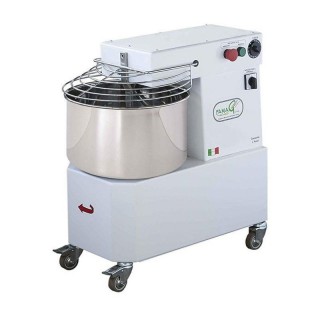
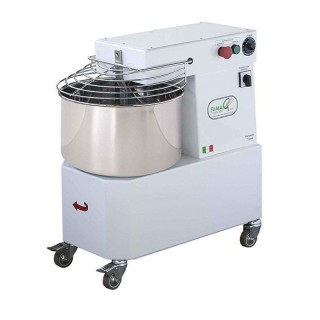
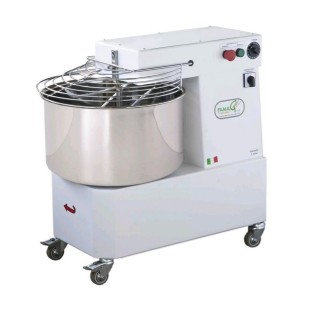

When it comes to the professional production of bread, pizza, focaccia, large leavened baked goods, or pastry products, choosing the right dough mixer is one of the most important decisions for organizing a production facility.
Many professionals focus exclusively on bowl capacity or the price of the machine. In reality, a professional dough mixer directly affects dough quality, productivity, processing times, and even staff management.
An undersized machine can slow down production during peak workloads. On the other hand, an oversized machine may represent an inefficient investment for the actual needs of the business.
The right choice depends on several factors:
- type of product being produced;
- daily dough production volume;
- hydration level;
- production frequency;
- available space;
- laboratory organization.
Whether you operate a pizzeria, an artisan bakery, or a professional pastry shop, understanding the differences between the various types of dough mixers is the first step toward making an informed purchase.
Discover our professional pizza dough mixers
Discover our professional bread dough mixers
Discover our professional planetary mixers
Why does the choice of dough mixer affect the final result?
A dough mixer is much more than a machine that simply combines ingredients. During the mixing process, fundamental transformations take place that influence the final structure of the dough.
The development of the gluten network, air incorporation, water absorption, and temperature control all directly affect the quality of the finished product.
Consider, for example, a modern high-hydration pizza. A dough containing 75–80% water requires a very different mixing process compared to cookie dough or panettone dough.
Likewise, a bakery producing hundreds of kilograms of bread every day has completely different requirements from a small takeaway pizzeria preparing only a few batches of dough daily.
For this reason, there is no universally perfect dough mixer—only the one that best suits the specific needs of your business.
What types of professional dough mixers are available?
In the professional sector, the main technologies used are:
- spiral dough mixers;
- fork dough mixers;
- double-arm dough mixers;
- planetary mixers.
Each offers different features, advantages, and applications.
Spiral dough mixer: the most popular choice for pizzerias
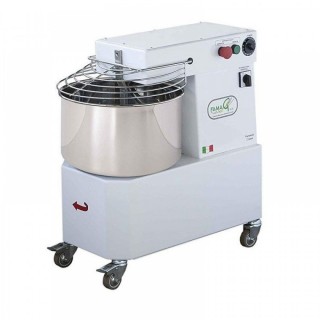
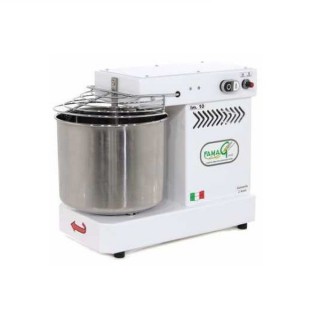
Today, the spiral dough mixer is the most widely used solution in professional pizzerias.
Its specially designed mixing tool allows it to efficiently process doughs for the production of:
- traditional pizza;
- contemporary pizza;
- tray-baked pizza;
- focaccia;
- bread;
- leavened baked goods.
Its main advantages include:
- high productivity;
- reduced mixing times;
- excellent dough oxygenation;
- optimal gluten network development;
- ease of use.
For this reason, most professional pizzerias choose this technology as their primary solution.
Learn more:
Professional Pizza Dough Mixers
Fork dough mixer: the traditional choice
Fork dough mixers process dough more gently than spiral mixers.
The slow mixing action reduces dough heating and helps preserve the characteristics of the flour.
For this reason, they are often used in:
- artisan bakeries;
- specialized production laboratories;
- long-fermentation productions;
- high-quality processing.
Mixing times are generally longer, but the gentler treatment is highly appreciated by many professional bakers.
Double-arm dough mixers: for premium-quality processing
Double-arm dough mixers replicate the movement of hand kneading.
This technology is mainly used for:
- large leavened baked goods;
- panettone;
- colomba cakes;
- very delicate doughs;
- premium artisan production.
Their greatest strength is their ability to develop the dough structure while limiting temperature increase during the mixing process.
Planetary mixer: the most versatile solution for pastry production
When it comes to creams, whipped mixtures, light batters, and pastry preparations, planetary mixers are the most widely used technology.
Unlike spiral dough mixers, which are primarily designed for developing leavened doughs, planetary mixers are intended to handle a wide variety of preparations thanks to the possibility of using dedicated attachments such as:
- whisk;
- paddle beater;
- dough hook.
This allows a single machine to be used for:
- cookie doughs;
- whipped mixtures;
- creams;
- shortcrust pastry;
- sponge cake;
- laboratory pastry preparations.
For this reason, the planetary mixer is often the operational core of many professional pastry laboratories.
Discover our professional planetary mixers
How do you choose the right dough mixer capacity?
One of the most common mistakes is choosing a machine based solely on its price or the available space.
Instead, bowl capacity should be evaluated by considering:
- daily dough production volume;
- number of mixing cycles per day;
- type of dough;
- possible production peaks;
- business growth prospects.
A pizzeria producing 80 pizzas per day has completely different needs from one producing 400.
Likewise, a bakery that works with multiple doughs simultaneously may require a larger-capacity machine than the final production volume alone would suggest.
5 kg dough mixers: when are they sufficient?
Compact dough mixers are an excellent solution for:
- small production laboratories;
- start-up businesses;
- pizzerias with limited production;
- light professional use;
- recipe testing and development.
In many cases, a 5 kg machine delivers professional results without taking up much space.
Learn more:
5 kg Professional Dough Mixer: The Most Valuable Kitchen Ally
Why is it important to consider hydration?
The declared capacity of a machine does not tell the whole story.
A pizza dough with 60% hydration behaves very differently from a contemporary dough with 75–80% hydration.
The higher the hydration level, the greater the workload required from the machine during mixing.
For this reason, many professionals prefer never to use 100% of the dough mixer's rated capacity, leaving an operating margin that allows for more efficient mixing while reducing mechanical stress.
Common mistakes when choosing a professional dough mixer
Many poor purchasing decisions stem from superficial evaluations.
The most common mistakes include:
Choosing an undersized machine
A machine that is too small requires more mixing cycles, slowing down production and increasing the workload.
Focusing only on the price
An initial difference of a few hundred euros can quickly be offset by greater productivity, reliability, and long-term durability.
Ignoring the type of dough
A machine that is perfect for pizza may not be the ideal choice for a pastry shop, just as a planetary mixer is generally not the best solution for intensive pizza production.
Not considering future growth
Many businesses purchase machines that meet their current needs without taking into account possible increases in production over the coming years.
Which dough mixer should you choose for a pizzeria?
In most cases, the answer is simple: a spiral dough mixer.
This technology offers the best balance between:
- dough quality;
- speed;
- ease of use;
- operating costs;
- productivity.
It is the most widely used solution in traditional pizzerias, contemporary pizzerias, and delivery-focused businesses.
Discover our professional pizza dough mixers
Which dough mixer should you choose for a bakery?
In the baking industry, the right choice largely depends on the type of products being made.
Spiral dough mixers are the most common solution thanks to their versatility, while fork and double-arm mixers are often preferred for artisan production focused on quality and long fermentation times.
Discover our professional bread dough mixers
Which dough mixer should you choose for a pastry shop?
In pastry laboratories, the planetary mixer generally remains the most versatile solution.
The ability to use different attachments allows professionals to prepare a wide variety of recipes without having to purchase dedicated machines for every application.
Are Famag spiral dough mixers still a benchmark?
Among the best-known brands in the spiral dough mixer sector is Famag, an Italian company that has earned a strong reputation among professionals and enthusiasts over the years thanks to the outstanding build quality of its machines.
Learn more:
Famag Dough Mixers: The Best Choice for High-Quality Dough
The dough mixer as part of the production workflow
A dough mixer should not be considered an isolated piece of equipment within the laboratory.
In modern pizzerias, bakeries, and professional pastry shops, it must integrate into a broader production workflow that includes:
- ingredient preparation;
- mixing;
- fermentation;
- storage;
- processing;
- baking;
- packaging.
Choosing the right machine helps improve organization, operational continuity, and overall productivity.
To learn more about organizing a modern pizza production laboratory, see:
Professional Pizzeria Equipment: How to Design a Modern Pizzeria
Choosing the right dough mixer means investing in the quality of your work
Whether you run a pizzeria, a bakery, or a pastry shop, the dough mixer is one of the most important pieces of equipment in the entire production facility.
Understanding the differences between spiral, fork, double-arm, and planetary mixers allows you to make a more informed decision, avoid costly purchasing mistakes, and improve the quality of your production.
The ideal machine is not necessarily the largest or the most expensive, but the one that best supports your production workflow, recipes, and business objectives.
ACQUISTA ADESSO: