





















SHOP NOW:
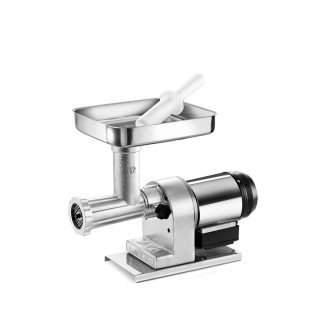
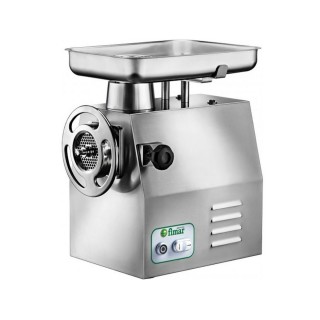

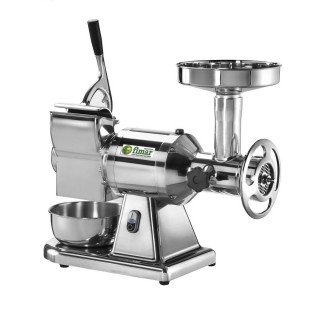


When choosing a professional meat grinder, one of the first decisions concerns the machine configuration: countertop grinder or refrigerated meat grinder.
On paper, the difference may seem purely technical, but in daily practice it affects work organization, time management, and hygiene control.
Understanding when refrigeration is truly needed—and when it is unnecessary—helps avoid wrong investments and operational complications.
What is meant by a countertop meat grinder and a refrigerated meat grinder?
The countertop meat grinder is the most common configuration: a machine dedicated exclusively to grinding, installed on a worktop or stand.
The refrigerated meat grinder, on the other hand, integrates a cooling system that keeps the meat at a controlled temperature during processing.
The difference is not aesthetic but functional, and it must be evaluated based on the real context of the laboratory.
Why is the countertop meat grinder still the most widely used in butcher shops?
In most Italian butcher shops, a countertop meat grinder is more than sufficient to ensure efficient production of ground meat.
When volumes are spread throughout the day and meat is processed fresh, cold control can be managed upstream, without the need for integrated refrigeration.
In these cases, simplicity, ease of cleaning, and speed of use are often more important than added technology.
When does a refrigerated meat grinder become truly useful?
A refrigerated meat grinder makes operational sense when:
- grinding volumes are high and concentrated
- processing times are extended
- meat remains in the machine for longer periods
Under these conditions, temperature control helps preserve product quality and reduce the risk of uncontrolled temperature increases.
This type of choice should already be evaluated during the
design phase of the food laboratory
,
as it affects space, energy consumption, and daily management.

Integrated refrigeration: real advantage or false sense of security?
One of the most common mistakes is to consider the refrigerated meat grinder as an “automatic guarantee” of safety.
In reality, refrigeration does not replace proper work organization or an effective HACCP plan.
If workflows are disorganized or timing is not controlled, even a refrigerated machine loses its effectiveness.
How does work organization change between the two solutions?
With a countertop meat grinder, organization is based on:
- grinding frequency
- upstream cold management
- processing speed
With a refrigerated meat grinder, instead, the machine becomes a more stable part of the production line and requires greater attention to:
- maintenance
- cleaning
- energy management
This difference affects how the meat grinder integrates with other equipment in the line.
Meat grinder and processing line: the relationship with sausage stuffers
In laboratories where ground meat is also destined for stuffing, the choice of meat grinder directly affects the next phase.
Timing, temperatures, and continuity must be consistent between the two machines.
This connection is evident in the
design of professional sausage stuffers in the laboratory,
where the meat grinder represents the first link in the chain.
Which solution is more consistent with HACCP?
From an HACCP standpoint, there is no mandatory choice.
What matters is the ability to control risk: timing, temperatures, handling, and cleaning.
In some contexts, a refrigerated meat grinder facilitates control; in others, it introduces unnecessary complexity.
The right choice is the one that makes the process easier to manage.
When does it make sense to concretely choose a meat grinder model?
Only after clarifying:
- actual grinding volumes
- frequency of use
- integration with other phases
does it make sense to compare the professional meat grinders best suited to your laboratory and evaluate whether refrigeration is an added value or an excess.
Countertop or refrigerated meat grinder: work decides, not technology
The choice between a countertop and a refrigerated meat grinder has no universal answer.
It depends on the pace of the laboratory, volumes, and how ground meat is handled in daily practice.
When the machine is consistent with real work needs, technology stops being a problem and becomes a tool.
SHOP NOW:
The right configuration is the one that simplifies the process
A well-chosen meat grinder reduces errors, slowdowns, and operational stress.
Whether countertop or refrigerated, the right configuration is the one that
integrates into the workflow,
not the most complex one.
This article clarifies the operational differences; the next ones will explore performance, power, and daily management.