




















SHOP NOW:


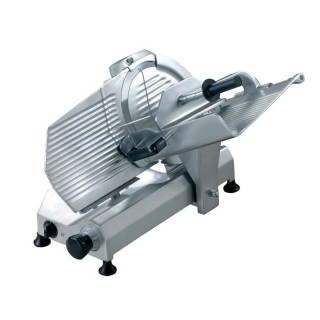
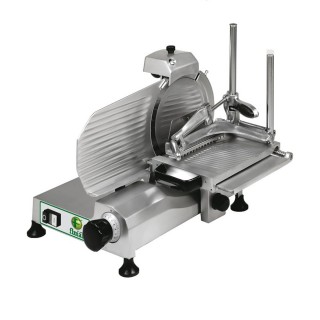
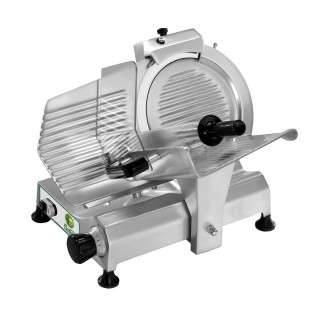


The slicer is one of the most frequently used machines in a food-processing lab, but also one of those that causes the most workplace injuries.
Not because it is inherently “dangerous,” but because it is often placed in poorly organized environments or used too casually.
In everyday practice, safety is almost always a matter of context.
Why is the slicer a critical machine for safety?
The slicer operates with an exposed blade and requires constant attention.
In moments of haste or under pressure, it is easy for the level of attention to drop, especially if the workstation is not well designed.
This is where most accidents occur.
The most frequent mistakes seen in laboratories
Among the most common mistakes are incorrect postures, safety guards removed “just to be quicker,” and improper use during peak workload periods.
These are situations that anyone working in a lab recognizes immediately, because they happen when the counter is full and time never seems enough.
Safety and workstation design
Many accidents do not depend on the machine itself, but on where it has been placed.
Tight spaces, insufficient lighting, or disorganized workflows force the operator into unnatural movements and increase risk.
Safety must therefore be addressed already during the design of the food-processing laboratory, not only through training.
The owner’s responsibility is not just a formal one
The business owner is responsible for providing a safe working environment.
If it is foreseeable that the slicer will be used under stressful conditions or with incorrect postures, responsibility cannot be placed solely on the operator.
This aspect is closely linked to what is discussed in professional slicers: when they are mandatory and when they are not.
When does choosing a slicer also become a safety decision?
Choosing the right slicer means reducing risk upstream.
At this stage, it is appropriate to compare the professional slicers best suited to your laboratory, evaluating stability, safety guards, and ease of use.
SHOP NOW:
Safety starts with daily organization
A well-organized laboratory drastically reduces the risk of accidents.
The slicer becomes dangerous only when it is forced into a context that does not support it.