




















ACQUISTA ADESSO:


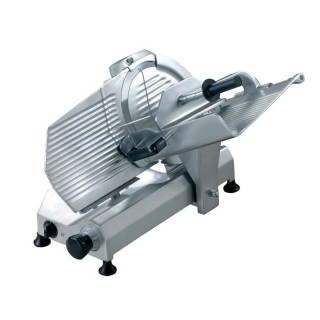
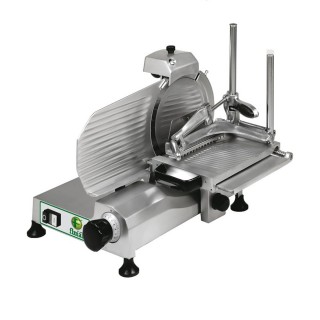
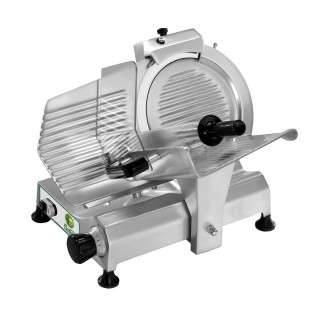



Designing a food laboratory means making decisions that affect productivity, safety, and work quality every single day. Among these, the choice and placement of a professional slicer is never a minor detail: it is an operational hub that involves workflow, space organization, and hygiene.
During the design phase, the slicer should not be considered “just another piece of equipment,” but rather a true workstation, with specific requirements and a direct impact on laboratory efficiency.
What is the real role of a slicer in a professional laboratory?
A professional slicer is used to standardize cuts, reduce processing time, and ensure consistency in the finished product. In a well-designed laboratory, however, its role goes beyond simple slicing: it becomes a critical transition point between preparation, portioning, and service.
This is the same approach applied when
designing a food laboratory in a functional way,
by evaluating each piece of equipment in relation to the overall workflow.
At what stage of the design process should the slicer be planned?
The slicer must be considered already during the layout phase, not after the project is complete. Adding it later often leads to compromises: insufficient space, inconvenient positioning, or interference with other equipment.
Anyone who has already dealt with careful laboratory design knows that every machine must be planned even before defining furnishings and pathways.
Where should the slicer be correctly positioned in the laboratory layout?
The slicer’s position should follow the logical flow of the product. Ideally, it should be placed between the preparation area and the packaging or service area, avoiding intersections with dirty or storage zones.
This logic is the same used for other strategic equipment, such as vacuum machines, which cannot be positioned randomly within the laboratory.
How does the slicer affect operator ergonomics and safety?
A poorly positioned or undersized slicer forces operators into awkward postures and repetitive movements. Over time, this results in fatigue, slowdowns, and a higher risk of errors. Operator safety must therefore be considered already during the design phase, not left solely to daily equipment use.
What is the relationship between the slicer, hygiene, and HACCP?
The slicer is one of the most sensitive pieces of equipment from a hygiene standpoint. For this reason, the design must facilitate cleaning, disassembly, and sanitization, avoiding hard-to-reach areas or tight spaces.
When the workstation is designed correctly, compliance with HACCP principles becomes a natural part of daily operations.
Slicer and workload volumes: why they must be evaluated together
One of the most common mistakes during the design phase is underestimating actual workload volumes. A slicer used only a few times a day has very different requirements compared to a machine used continuously.
Evaluating volumes helps avoid operational slowdowns and allows for designing a workstation that is truly sustainable over time.
How does the slicer interact with other laboratory equipment?
A slicer never works in isolation. It constantly interacts with refrigerators, refrigerated counters, vacuum machines, and packaging systems.
When equipment is designed as part of a unified system, the laboratory becomes smoother, more organized, and more productive.
Why should the slicer be considered a workstation rather than a simple machine?
Considering the slicer merely as a “machine to place on a counter” almost always leads to design errors. In reality, it is a complete workstation, with requirements related to space, safety, hygiene, and operational comfort.
This approach improves work organization and leads to more informed equipment choices.
When does it make sense to move from design to slicer selection?
Only after defining layout, workflows, volumes, and operational needs does it make sense to evaluate the
professional slicers best suited to your laboratory.
In this way, the machine is not forced into the project but becomes a natural extension of it, consistent with space organization and daily operations.
This is the step that separates an improvised choice from a truly professional one.
The slicer as a design choice, not an isolated purchase
A professional slicer is a design lever, not an accessory. Integrating it correctly into the layout means working better, faster, and more safely every day.
This article represents the central semantic reference for all in-depth content dedicated to professional slicers on the Cornerchef blog.