




















SHOP NOW:


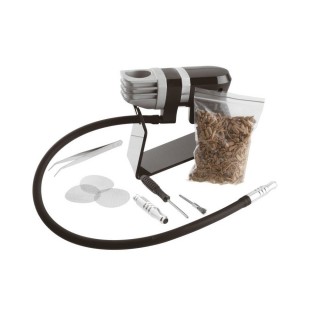

When it comes to professional smokers, the most common mistake is to consider them as an accessory added to the offering. In a food production laboratory, however, the smoker is a true process equipment that directly affects work organization, timing, and food safety management.
This article is not intended to explain what smoking is, but to help you understand whether and which smoker to choose, avoiding incorrect purchases or equipment that ends up being underused over time.
SHOP NOW:
Why a professional smoker is different from a domestic solution
A professional smoker is designed to operate in a controlled, continuous, and repeatable manner. Unlike domestic or semi-professional solutions, it allows precise control over temperature, smoke intensity, and exposure time.
In daily laboratory practice, this difference translates into:
- consistent results
- greater operational safety
- real integration into the workflow
Non-professional solutions, even if they may appear similar, do not offer the same guarantees and often end up being used only sporadically.
Types of smokers available for professional use
Professional smokers are mainly differentiated by the type of processing they are designed to support. Some models are intended for cold smoking, others for hot smoking, and others still for more flexible use.
The choice should never start from price or size alone, but rather from:
- the type of product to be smoked
- frequency of use
- production volumes
- available space in the laboratory
An oversized or undersized smoker creates different, yet equally penalizing, issues.
How to evaluate the integration of a smoker into the laboratory
From an operational standpoint, the smoker should be considered as a phase of the production process. Its placement must be consistent with other operations, avoiding interference with preparation, preservation, and storage.
In practice, many issues arise when the smoker is installed “where there is space,” without a real assessment of the workflow. In such cases, even a good piece of equipment risks not being used correctly.
Common mistakes when choosing a professional smoker
One of the most frequent mistakes is purchasing a smoker while focusing only on its effect on the final product, without considering the impact on the laboratory’s daily organization.
Other recurring mistakes include:
- underestimating processing times
- not considering the separation of production phases
- choosing models that are poorly suited to actual working volumes
These issues often emerge only after purchase, when addressing them becomes more complex.
When a smoker becomes a truly productive choice
A professional smoker becomes a productive choice when it is integrated into an already well-structured laboratory, with clear workflows and a defined product strategy. Under these conditions, the equipment does not slow down operations, but instead makes them more efficient and consistent.
When introduced too early, however, it may remain unused or create operational bottlenecks, undermining the investment.
Where to find professional smokers suitable for your laboratory
The choice of the right smoker always depends on the operational context. For this reason, it is useful to compare models specifically designed for use in gastronomy, butcher shops, and professional food laboratories.
In the dedicated category for professional smokers and accessories, you can find solutions designed to integrate correctly into daily operations.