




















ACQUISTA ADESSO:



In a butcher shop, in a gastronomy with in-house processing or in a well-structured food laboratory, a professional bone saw is not just a machine to buy “when needed.”
It is an operational decision that affects working times, safety, counter organization and even the quality of customer service.
This is exactly where the most common mistake occurs: treating the bone saw as a catalogue item rather than as a key node in the production workflow.
This article is designed to help you understand when, why and in which context a bone saw becomes truly essential, without repeating what you can already find in the product category.
ACQUISTA ADESSO:
The real question is not “which bone saw”, but “do you really need one for your work?”
Before comparing models, power ratings or dimensions, the right question is another one:
does my business really need a professional bone saw?
The answer depends on three key factors, which we will now examine.
Type of daily processing
A bone saw radically changes the way you work when:
- you regularly handle bone-in cuts
- you work with whole fresh meat (sides, quarters, large cuts)
- you prepare custom cuts on customer request
If your work is limited to final portioning or already pre-cut products, it is often not a priority.
Volumes and continuity
A bone saw is not designed for occasional use.
It delivers its greatest value when:
- bone cutting is repetitive
- the workflow is continuous
- speed has a direct impact on margins
In these cases, the benefit is not only technical, but also economic.
Space and laboratory layout
This is where design comes into play.
If you are setting up or reorganizing your laboratory, the bone saw must be included in the overall equipment plan, as explained in the article dedicated to the design of a gastronomy and butcher shop laboratory.
Why a bone saw is a choice that impacts method, safety and quality
Unlike many other pieces of equipment, a bone saw does not only affect the final result, but how you work every single day.
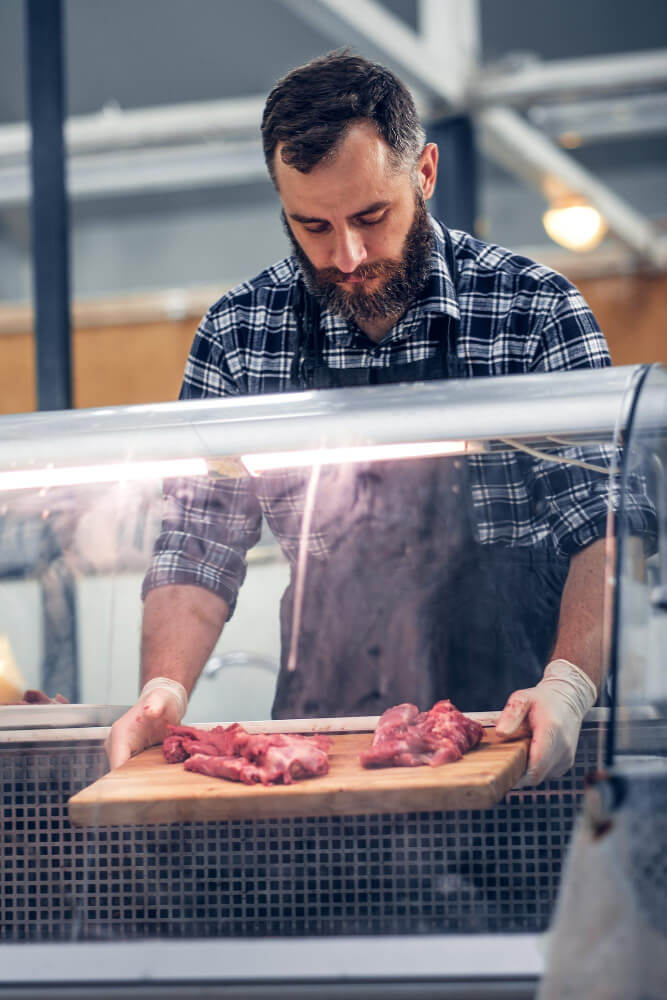
Work method
- more precise cuts
- less physical strain
- greater portion standardization
Safety
A professional bone saw, when correctly chosen and positioned:
- reduces the risk of manual injuries
- operates with dedicated guards and guides
- improves workstation ergonomics
Perceived quality
Clean, precise cuts mean:
- better presentation
- less waste
- higher end-customer satisfaction
When to move from evaluation to selection
Understanding whether a professional bone saw is truly necessary is the first step. The second is choosing a machine that is consistent with the way you work every day.
When, by analysing volumes, cutting types and laboratory organization, bone cutting emerges as part of the daily routine, it makes sense to consider solutions designed for continuous professional use.
In these cases, in the section dedicated to bone saws for butcher shops you can find an overview of models designed for different working contexts, useful for orienting yourself based on available space, frequency of use and type of processing.
Bone saw and laboratory design: a relationship often underestimated
Installing a bone saw without rethinking the layout is one of the most common mistakes.
When designing an efficient laboratory:
- the bone saw should be placed in a dedicated area
- it must have adequate loading and unloading space
- it must integrate with counters, cold rooms and work surfaces
This is why choosing a bone saw should never be an isolated decision, but an integral part of a well-planned professional laboratory design.
Conclusion: the bone saw as a decision, not just a product
A professional bone saw:
- is not for everyone
- is not always necessary
- should not be chosen “from a catalogue”
But when placed in the right context, it becomes a key tool for efficiency, safety and quality.
And it is precisely this awareness that distinguishes:
- a casual purchase
- from a professional choice