




















SHOP NOW:


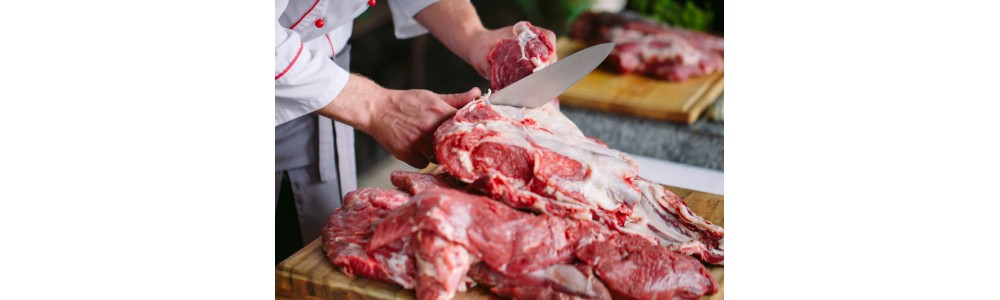
In a food laboratory, every piece of equipment has value only if it is correctly integrated into the workflow.
The professional bone saw is no exception: its impact depends not only on its technical features, but on how it integrates with the other processing stages.
It is precisely this integration that determines efficiency, safety, and process quality.
SHOP NOW:
How to properly integrate a bone saw into the laboratory?
To properly integrate a bone saw, it must be included in the workflow, coordinating it with other equipment and with the organization of the workspace.
Why can’t the bone saw be considered a standalone machine?
One of the most common mistakes is treating the bone saw as an independent piece of equipment.
In reality, cutting is often an initial stage that affects all subsequent processes.
If this stage is not managed correctly, the entire process becomes less efficient.
Where does the bone saw fit within the workflow?
The bone saw is generally positioned at the beginning of the production process, in the primary processing stage.
This is where:
- large cuts are processed
- basic cuts are prepared
- the product is portioned
This step is essential to ensure consistency in subsequent stages.
The connection with subsequent processes
After cutting, the product may be directed to different processes.
This makes integration between equipment essential.
In many laboratories, the bone saw is the first link in a chain that includes processing with professional meat grinders for butcher shops and professional sausage stuffers in laboratory design, creating a continuous and organized workflow.
What happens if the bone saw is not integrated into the workflow?
If the bone saw is not properly integrated, it creates delays, discontinuity between stages, and an increased operational risk within the laboratory.
Bone saw and workspace organization
Integrating the bone saw also involves the laboratory layout.
A well-positioned machine reduces unnecessary movement and improves safety.
For this reason, the bone saw must be included from the design phase of the food laboratory, where spaces and equipment are organized according to the workflow.
How to avoid bottlenecks in the workflow?
An efficient workflow depends on balance between stages.
If the bone saw is undersized or poorly positioned, it becomes a critical point.
To avoid bottlenecks, it is important to:
- properly size the machine
- position it functionally
- coordinate it with other equipment
The role of the bone saw in operational continuity
A well-integrated bone saw allows for continuous work, without interruptions between stages.
This improves:
- productivity
- organization
- work quality
The link between workflow and safety
A well-organized workflow also reduces risks.
When stages are clear and coordinated, operational errors decrease.
This aspect is also explored in the article dedicated to bone saw safety in the food laboratory, where the relationship between usage and risk is analyzed in detail.
How to choose a bone saw based on workflow
The choice of bone saw should start from the process, not the machine.
Only after defining the workflow does it make sense to compare professional bone saws for butcher shops, identifying the most suitable solution.
The bone saw as a connection point between stages
In the modern laboratory, every piece of equipment is connected to others.
The bone saw represents a junction between primary processing and subsequent transformations.
When this connection is properly designed, the process becomes more efficient and controlled.
SHOP NOW:
The workflow is what gives value to the machine
A high-performance bone saw that is poorly integrated loses much of its value.
On the contrary, a machine aligned with the workflow improves the entire process.
Efficiency comes from integration
In a food laboratory, efficiency does not depend on individual equipment, but on how they work together.
The bone saw, when properly integrated, becomes a key element of this system.