


















SHOP NOW:


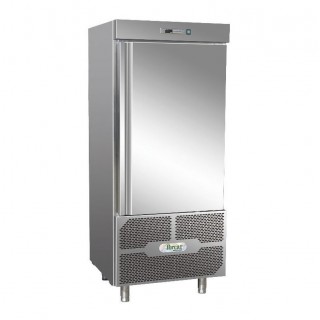



The blast chiller is one of the most important pieces of equipment in a professional food production kitchen, because it has a direct impact on food safety, product quality and the way work is organised. Before comparing models, capacities or brands, it is essential to understand how the blast chiller fits into the design of a delicatessen or butcher's production area, where every machine has to work smoothly with the rest of the equipment and with the daily workflow. Only by starting from the bigger picture can you choose a blast chiller that genuinely matches the production needs of your business.
SHOP NOW:
What a blast chiller is really for
A blast chiller is designed to bring food quickly down from a high temperature to a safe temperature, preventing it from spending too long in the so-called "danger zone" where bacteria multiply.
This process preserves the taste, texture and appearance of the food, reduces hygiene risks and makes daily production easier to manage.
In a professional setting, blast chilling is not a shortcut but a controlled technical procedure, essential for working in a structured way.
Blast chillers and food safety (HACCP)
From a food safety point of view, the blast chiller is one of the most effective tools for complying with HACCP principles and EU food hygiene rules.
In particular, it allows you to:
- reduce the bacterial load quickly
- stabilise cooked or freshly prepared products
- prevent contamination during the cooling stage
In delicatessens and butcher's shops, where food is often prepared in advance, the blast chiller becomes a concrete guarantee of process control and traceability.
Is a blast chiller compulsory in a food production kitchen?
A blast chiller is not always a legal requirement, but in practice it becomes indispensable whenever you:
- produce food intended for chilled or frozen storage
- prepare food in advance
- handle large volumes or peaks in workload
- aim for a professionally organised production flow
During an inspection, the lack of a blast chiller can become a critical point, especially if there are no equally effective and documented alternative procedures in place.
Conventional cooling vs blast chilling
Conventional cooling (in a refrigerator, for example) is not fast enough to guarantee food safety.
Blast chilling, on the other hand, is designed to:
- lower the temperature quickly and evenly
- avoid thermal shocks that damage the product
- preserve the texture, colour and flavour of the food
This is particularly important in butcher's shops, where the quality of meat and ready-made products depends heavily on temperature control.
What temperatures does a blast chiller work at?
The most common question about this equipment is not what it does, but what temperatures it reaches and how quickly. Those two figures are what set a blast chiller apart from a powerful refrigerator.
From +90 °C to +3 °C: blast chilling
In the blast chilling cycle, freshly cooked food is brought from around +90 °C to +3 °C at the core in no more than 90 minutes. This is the operating threshold referred to by good food safety practice: below +3 °C bacterial growth slows down dramatically, and the time spent in the critical range between +65 °C and +10 °C, where micro-organisms grow fastest, is kept to a minimum. Cooling the same food in a conventional cold room takes several hours and passes through that range slowly.
Down to −18 °C at the core: blast freezing
In the blast freezing cycle, food is brought down to −18 °C measured at the core of the product, usually within four hours. Here speed is not only about safety: lowering the temperature quickly creates micro ice crystals instead of the large crystals formed by slow freezing, and it is the large crystals that break down the fibres and make the product lose moisture when it is thawed. That is why food frozen in a blast chiller keeps its texture and yield once it is regenerated.
Why times matter as much as temperatures
A temperature reached too slowly does not give the same result, even if the final value is identical. That is why professional blast chillers work with a core probe: the cycle does not end on a timer, it ends when the centre of the food has actually reached the set value. We have written a dedicated article on choosing between the chilling and freezing cycles, and when each one is the right option: the difference between positive and negative blast chilling.
Operational benefits of a blast chiller in delicatessens and butcher's shops
Adding a blast chiller to your production area brings concrete, measurable benefits:
- better work organisation
- less waste
- shorter production times
- standardised processes
- longer shelf life of the finished product
From a management point of view, it means working smarter, not harder, while consistently maintaining high quality.
The blast chiller in kitchen design
When designing a professional food production area, the blast chiller should not be treated as an afterthought, but as an integral part of the operational layout.
Its position affects:
- workflows
- the connection between the hot and cold areas
- how quickly products can be moved
- staff ergonomics
Good design allows you to make the most of the blast chiller's potential, avoiding bottlenecks and inefficiencies.
From its role to choosing the right blast chiller
Understanding what a blast chiller is for and the role it plays in production is the first step towards organising a food production area properly. When you move from theory to practice, however, operational variables come into play, such as workload, type of preparations, available space and frequency of use. At this stage, the choice of equipment should be guided by technical and practical criteria, avoiding oversized solutions or ones that do not match your real needs. If you want to look more closely at models, capacities and technical features, read our guide to choosing a professional blast chiller, designed to help restaurants, delicatessens and butcher's shops find the right solution for their way of working. To compare the available options directly, browse our range of professional blast chillers.
Using a blast chiller correctly: mistakes to avoid
Even with an excellent machine, incorrect use can undermine its effectiveness. The most common mistakes include:
- overloading the chiller or loading it unevenly
- using unsuitable containers
- putting in products that are still too hot without following a method
- neglecting cleaning and maintenance
Using the blast chiller correctly is an integral part of running a professional kitchen.
Why a blast chiller is a strategic choice, not just a technical one
In delicatessens and butcher's shops, the blast chiller is a strategic choice, not just a technical requirement.
It means:
- raising the level of service
- guaranteeing safety and quality
- organising work in a modern way
- preparing the business for growth
It is one of those tools that you do not notice until it is missing, but that makes all the difference when it is there.