



















SHOP NOW:

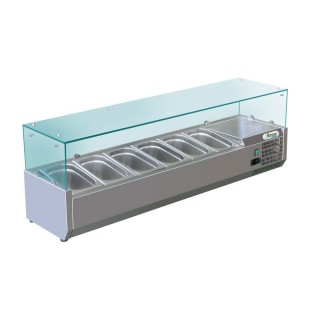
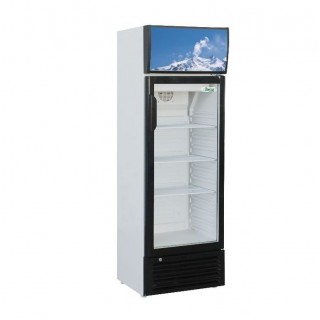
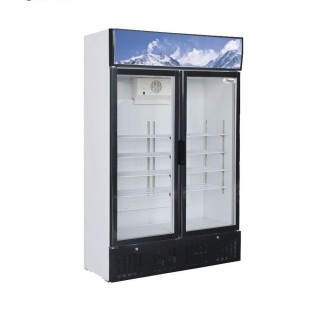

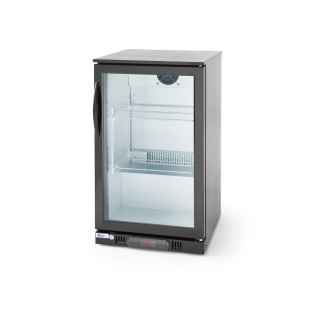

Refrigerated display cases for food and beverages are often the first element a customer notices when entering a deli, an advanced butcher shop, or a laboratory with direct sales.
From a professional standpoint, however, they are not simple display tools, but equipment that must be correctly integrated into the overall laboratory project.
This in-depth content is designed as a practical and operational guide, connected to a broader vision of space and equipment planning.
Before going into detail about the different types of refrigerated display cases, it is useful to have a clear overview of the general framework addressed in the
guide on
how to design a deli and butcher shop laboratory,
which defines layout, workflows, and operational logic.
SHOP NOW:
What is meant by a professional refrigerated display case
A professional refrigerated display case is equipment designed to keep food or beverages at a controlled temperature during display and service, even under intensive use conditions.
Compared to non-professional solutions, it is built to ensure thermal stability, operational continuity, and ease of cleaning.
A professional refrigerated display case keeps food and beverages at the correct temperature during display and sale.
The role of refrigerated display cases in laboratory design
Within a professional laboratory, the refrigerated display case represents a transition point between production, storage, and display.
For this reason, it should never be selected in isolation, but evaluated in relation to cold rooms, refrigerated counters, and workflow paths.
In the informational cluster dedicated to refrigerated display cases and refrigerated counters in laboratory design, this aspect is analyzed from a technical and planning perspective, clarifying why the display case is an integral part of the cold line rather than a simple accessory.
The refrigerated display case must be integrated into the laboratory project to ensure cold chain continuity.

Refrigerated display cases for food: real-world use in delis
Refrigerated display cases for food are mainly used in delis for ready-made dishes, fresh preparations, desserts, and products that need to remain visible to customers.
Their function is to keep products safe, organized, and accessible during service.
A correct choice allows you to:
- reduce the time products spend outside cold storage
- improve product rotation
- facilitate staff workflow
- maintain a consistent and orderly presentation
Refrigerated display cases for food allow products to be displayed while maintaining quality and safety.
Refrigerated display cases for beverages: fast service and thermal continuity
When it comes to beverages, the refrigerated display case serves a function more focused on service speed.
Bars, hot food counters, and high-volume sales operations require display cases capable of maintaining temperature even with frequent opening.
A well-designed beverage display case:
- ensures uniform cooling
- allows quick access
- reduces service time
- improves the customer experience
Refrigerated display cases for beverages support fast service while maintaining the ideal temperature.
Vertical and horizontal refrigerated display cases: how to choose
The choice between vertical and horizontal display cases depends on the type of service and the available space.
Vertical display cases are suitable when:
- space is limited
- front-facing visibility is a priority
- products are packaged or pre-portioned
Horizontal display cases are more functional when:
- products are frequently accessed
- operational activity is part of the service
- fast access is required
Vertical display cases prioritize visibility, while horizontal ones prioritize accessibility.
Dedicated refrigerated display cases: the case of sushi and sensitive products
Some preparations require specific attention.
Sushi and raw fish preparations require precise control of temperature and humidity, which is not always guaranteed by standard display cases.
In these cases, professional sushi refrigerated display cases are used, designed to maintain constant conditions during display and service.
You can explore dedicated solutions in the category
professional sushi refrigerated display cases.
Sushi refrigerated display cases are designed for the storage and display of raw fish.
Common mistakes when choosing a refrigerated display case
Many operational issues stem from choices that are not aligned with the laboratory project. The most common mistakes include:
- choosing a display case based solely on aesthetics
- underestimating actual capacity requirements
- ignoring opening frequency
- not considering thermal load
- failing to integrate the display case with other cold line equipment
The most common mistakes result from undersizing and lack of project integration.
Refrigerated display cases and the cold line: connection with laboratory design
Refrigerated display cases never operate on their own.
They are part of the cold line, together with cold rooms, refrigerated counters, and refrigerated tables, and must be designed as coordinated elements.
For this reason, the selection of a display case should always take place after defining layout and workflows, as explained in the guide on
deli and butcher shop laboratory design.