



















ACQUISTA ADESSO:



It's not just a box: the container for pizza dough and for its leavening is part of your work.
Anyone who does my job knows it well: dough is not just flour, water, yeast, and salt. It's a living organism that breathes, changes, and evolves during the hours of leavening. And how you treat it, how you store it, makes the difference between a pizza that opens well, fragrant, light, and one that drives you crazy at the counter.
For this reason, when we talk about pizza dough containers, we are not talking about a simple accessory. We are talking about a work tool as important as the mixer or the oven. And choosing the right one means working better and having a dough that performs as it should.
Why the right container makes a difference
Dough needs space to grow, but also protection. It must be protected from drafts, maintain the right humidity, not form a crust on the surface, and mature in the most stable conditions possible.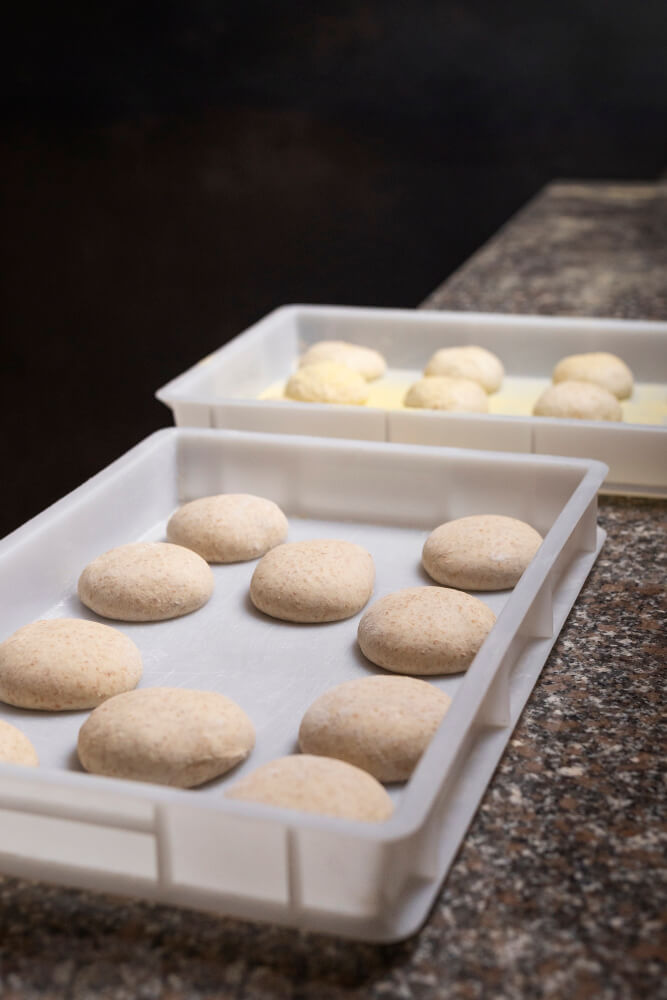
If you work with pre-portioned dough balls, you need a container that keeps them separate, organized, and in the right conditions until it's time to stretch them. If, on the other hand, you manage the whole dough, you need larger boxes that don't stress it and help you work it easily when you divide it into balls.
In both cases, the container is not just a space to place the dough: it is a tool that directly affects the quality of the final product.
Even the color matters: how to organize different types of dough
If you work in a pizzeria, you know it well: today there is no longer just one type of dough. There are those who work with classic direct dough, those who make long-maturation doughs, those who offer pizzas with ancient grain flour, multi-grain, wholemeal, or gluten-free.
For this reason, choosing different colored pizza boxes is not just an aesthetic matter. It is an intelligent working method that helps you to maintain order, avoid errors, and guarantee food safety, especially when you have to manage doughs with different needs, as in the case of gluten-free.
Having a white box for traditional dough, a blue one for multi-grain, and a green one for gluten-free — for example — makes everything clearer, more immediate, and safer. Those who work at the counter or in the laboratory always know where to put their hands, without risking contamination or confusion between preparations.
It's not a small detail. It's organization, it's safety, and, above all, it's respect for the customer who chooses a specific dough also for health or dietary reasons.
Where and how to store containers in a pizzeria
In a professional kitchen, there is never enough space. That's why pizza dough containers must be designed to fit well in trolleys, drawers, or on cold room shelves.
Modularity is everything. If you have already read our articles dedicated to Gastronorm containers and, more generally, to professional food containers, you know that the ability to stack, organize, and utilize every centimeter is fundamental. The same applies to dough.
There are tall service boxes, for whole dough, and short service boxes, perfect for dough balls. Lids are always necessary, especially if the dough has to stay in the cold room for several hours or overnight. They prevent the dough from drying out and protect against contamination.
Materials: what to choose and why
Most of the pizza containers you find on the market are made of food-grade polyethylene or food-grade polypropylene. It's not a random choice.
Polyethylene is more flexible, resistant to impacts, and low temperatures. Excellent if you work a lot with the cold room. Easy to clean, it does not absorb odors and lasts for years, even under stress.
Polypropylene, on the other hand, is more rigid. Those who prefer it do so because it has a more stable structure, which deforms less over time and gives a feeling of greater robustness. It also resists strong detergents and chemical agents well.
And then? There are stainless steel containers, of course, but for pizza dough, polyethylene and polypropylene remain the most appreciated materials.
How to choose format and dimensions
The choice is simple if you can answer these questions:
- How many dough balls do you manage every day? If you exceed 100-200 balls, you need specific boxes for dough balls, short and wide, easy to stack.
- Do you work with whole dough or pre-portioned dough? If you make long doughs, with slow leavening, it is often necessary to store the whole dough and then portion it later. In that case, you need taller pizza boxes.
- How much space do you have in the cold room? The boxes must fit into trolleys, shelves, or cold room drawers. Standard sizes are designed for this, but it's good to think about it beforehand.
- Do you use lids or not? If the dough stays out for a few hours, you can also stack without a lid. But if it goes into the cold room overnight, the lid becomes indispensable.
How to work better, if you have the right containers
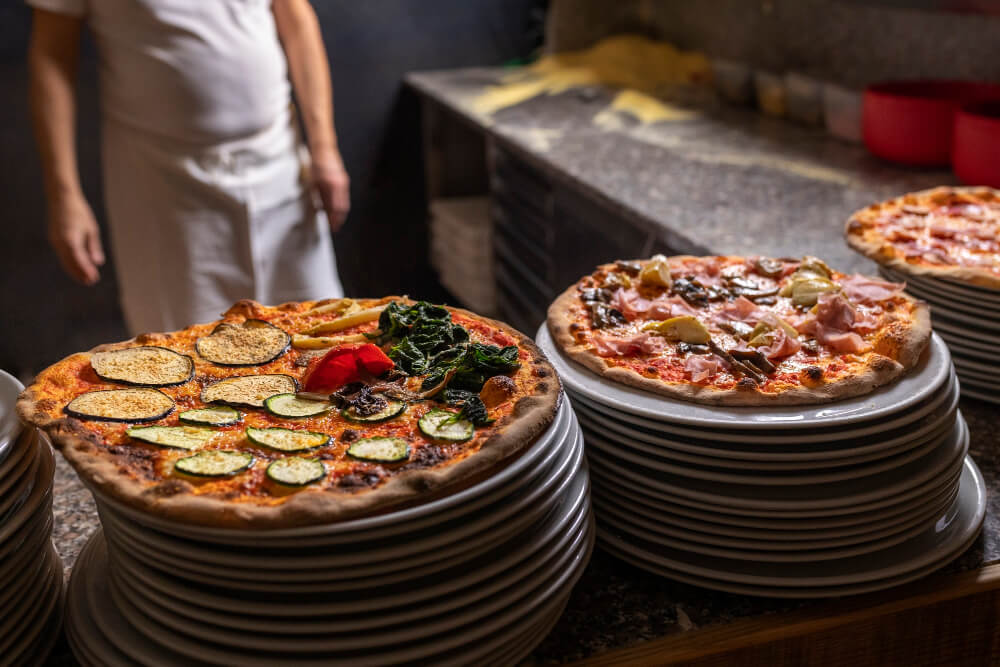 When you have the right pizza boxes, everything changes. You don't waste time looking for space, you don't risk the dough balls sticking together, the dough matures better, and it's easier to work at the counter.
The service is smoother, production is more organized, and the final quality of the pizza also benefits. It's not just a matter of organization, it's a matter of respect for the dough and for the work.
On Cornerchef.it you will find a selection of pizza dough containers and professional lids, made with those who truly work with pizza in mind. You will find boxes in various colors to facilitate dough management, dough ball containers, service boxes, lids, all in certified materials and designed to last over time.
And if you want to learn more, you can also read the articles dedicated to Gastronorm containers and professional food containers, because in the end everything is connected: when the kitchen